Barton Springs Pool
Austin TX
2013/06/02
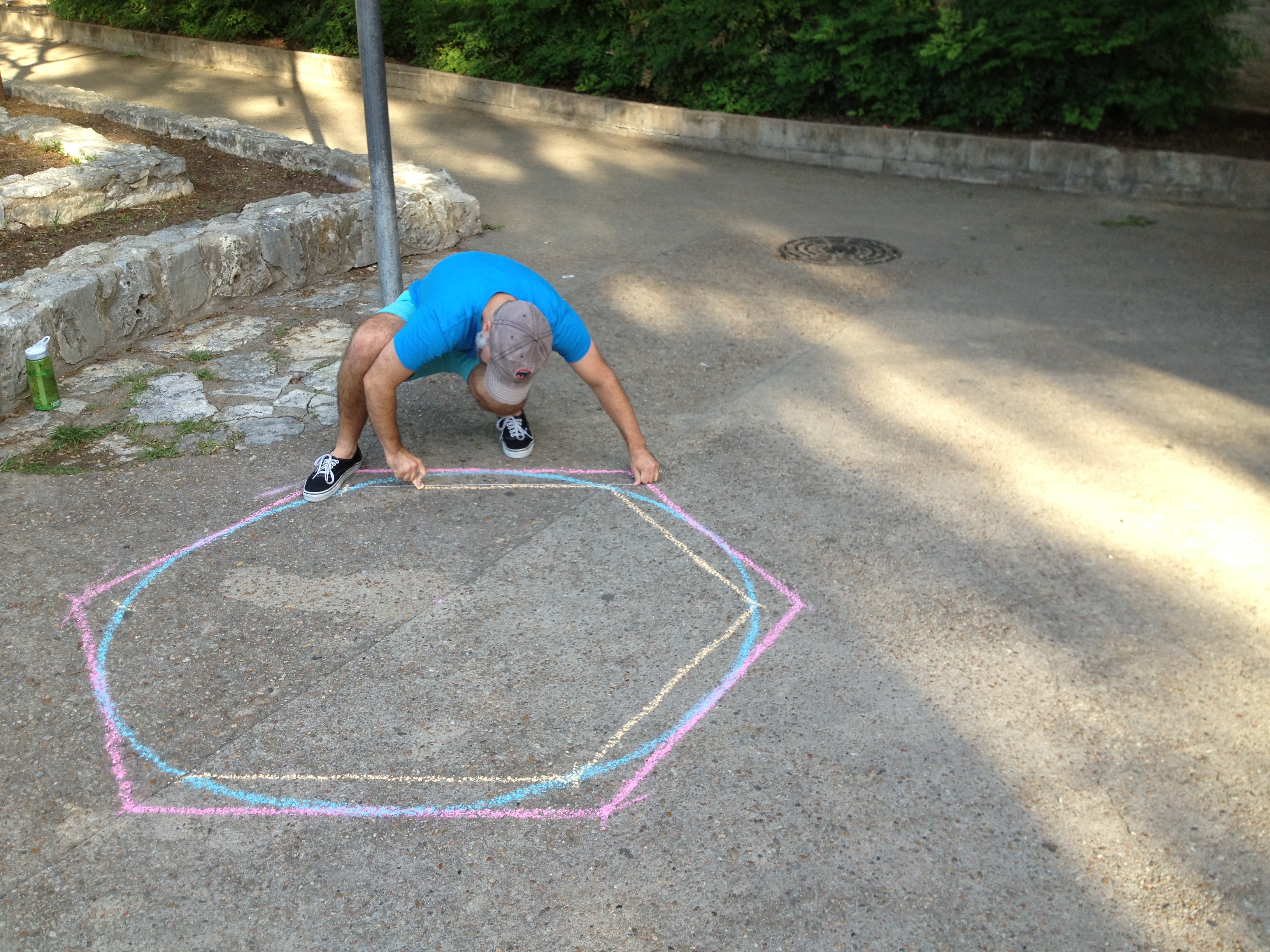
There are so many books, articles, websites, poems and cartoons about π; I considered not chalking it. I have been working on an upcoming post on Taylor series, but π just keeps saying, “Hey, after all I have done for you, will you please just spend some time with me?”
So, here we are spending some time with π. Taylor will have to wait.
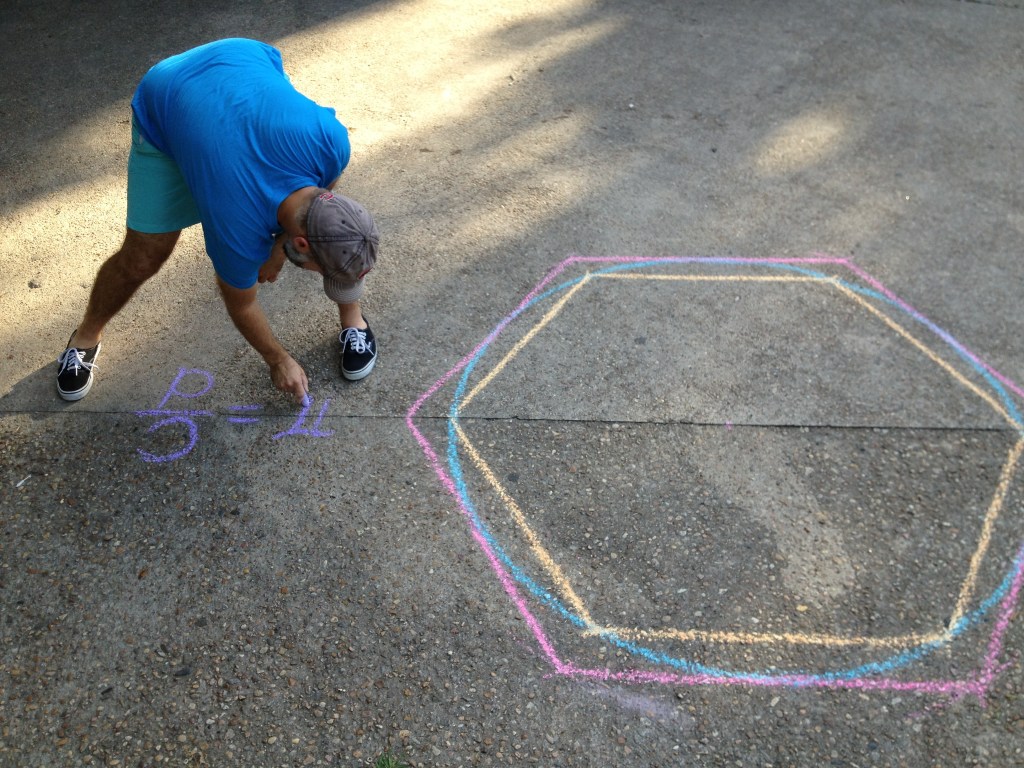
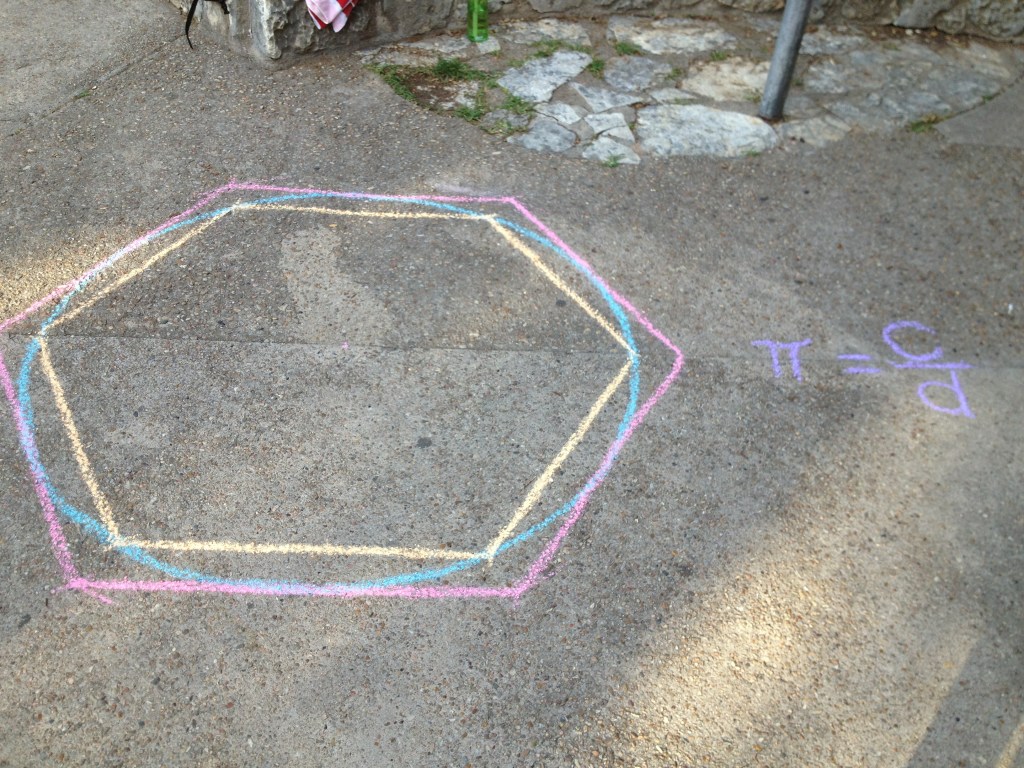
In mathematics, what we call π (pronounced like the dessert (pie) or the letter p depending on your disposition) is the ratio of the circumference of any circle to its diameter, i.e.

For any size circle, the ratio of its circumference to its diameter is the same as that of any other circle. Kind of amazing. This is akin to the constant ratio of the diagonal of any square to the length of one of its sides.[√2] Or, even simpler, the ratio of the perimeter of any square to the length of one of its sides: 4. Scale the square up or down and both the side length and the perimeter scale, too. Divide the square’s perimeter by the length of one side and you get 4.
But, we aren’t here to blather on about 4, as cool as a number it is. (It is, after all, the first prime number squared.) Let’s talk π. Everybody enjoys π.
Archimedes did not refer to the ratio C : d as π. He did however approximate it as being greater than 3 and 10/71 (about 3.14084507042254) and less than 3 and 1/7 (about 3.14285714285714). He did not directly measure the arc length of the circle, i.e. the circumference.
Archimedes quantized it.
(Well, sort of, I just like that fancy word.)
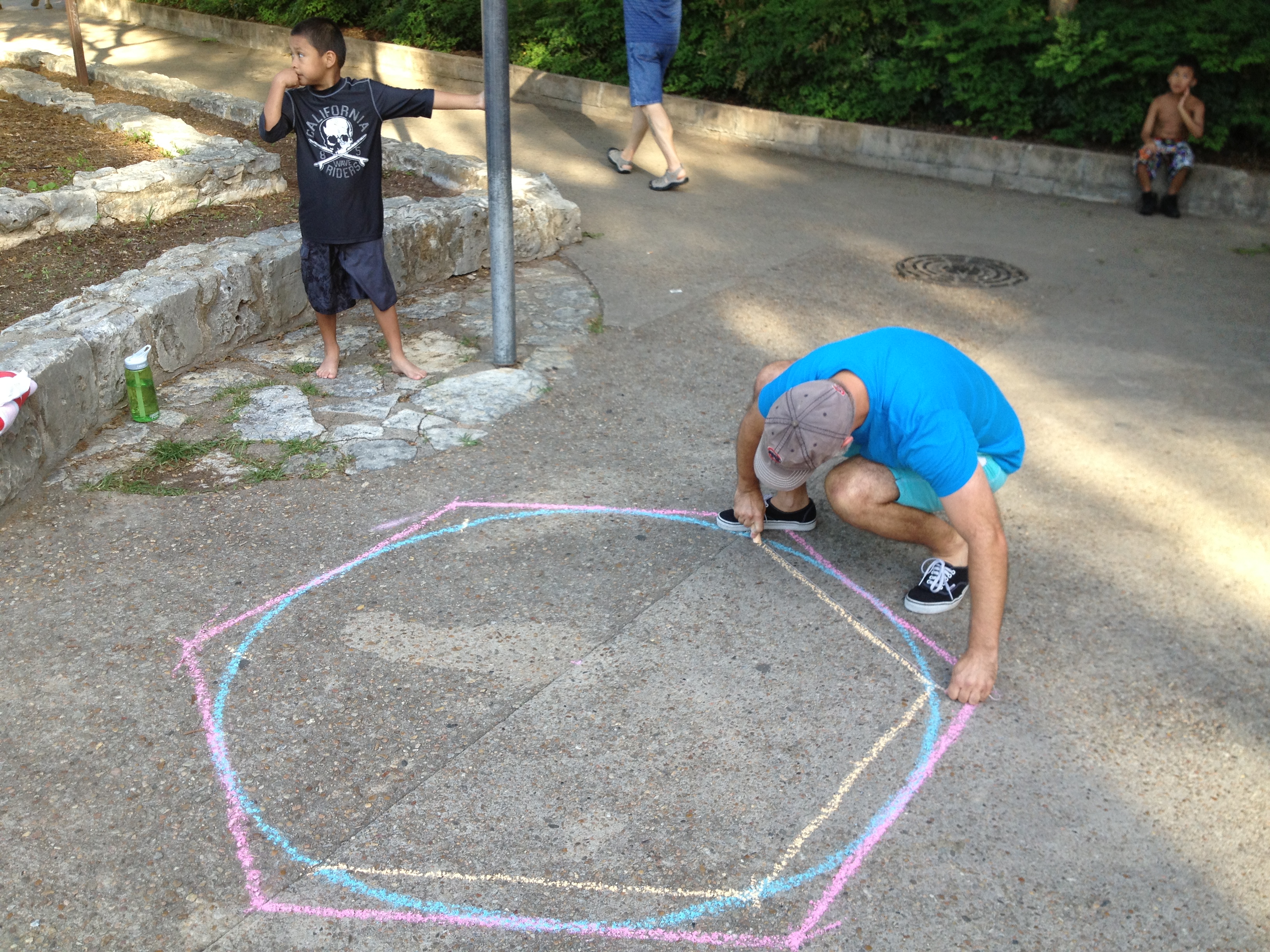
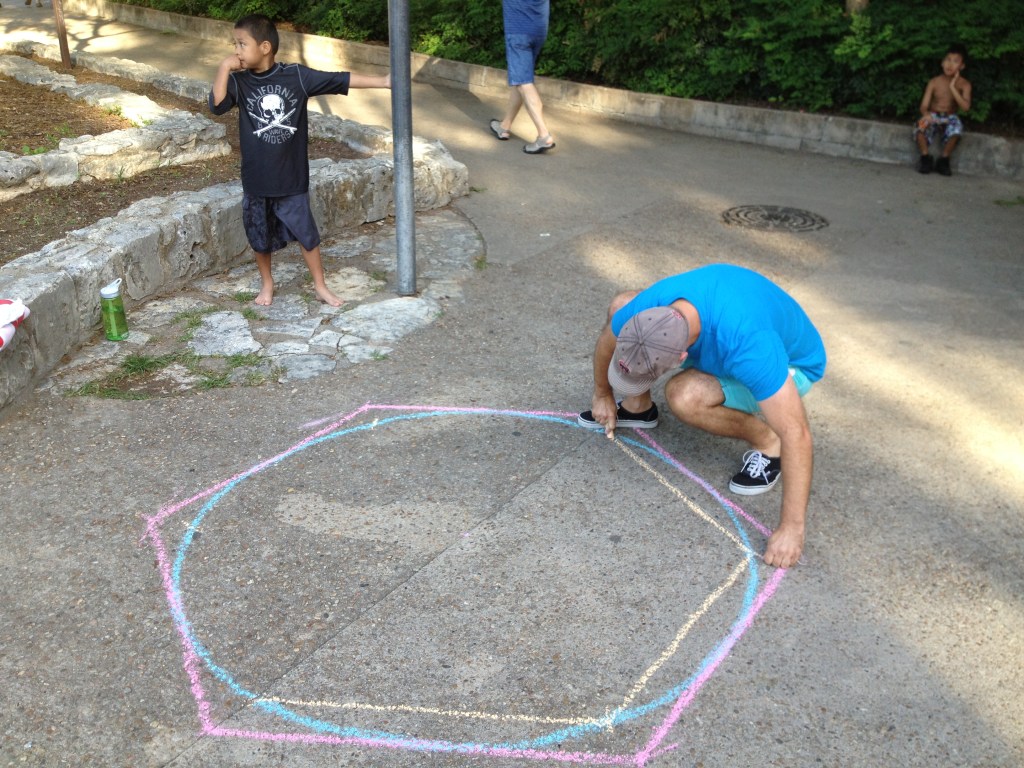
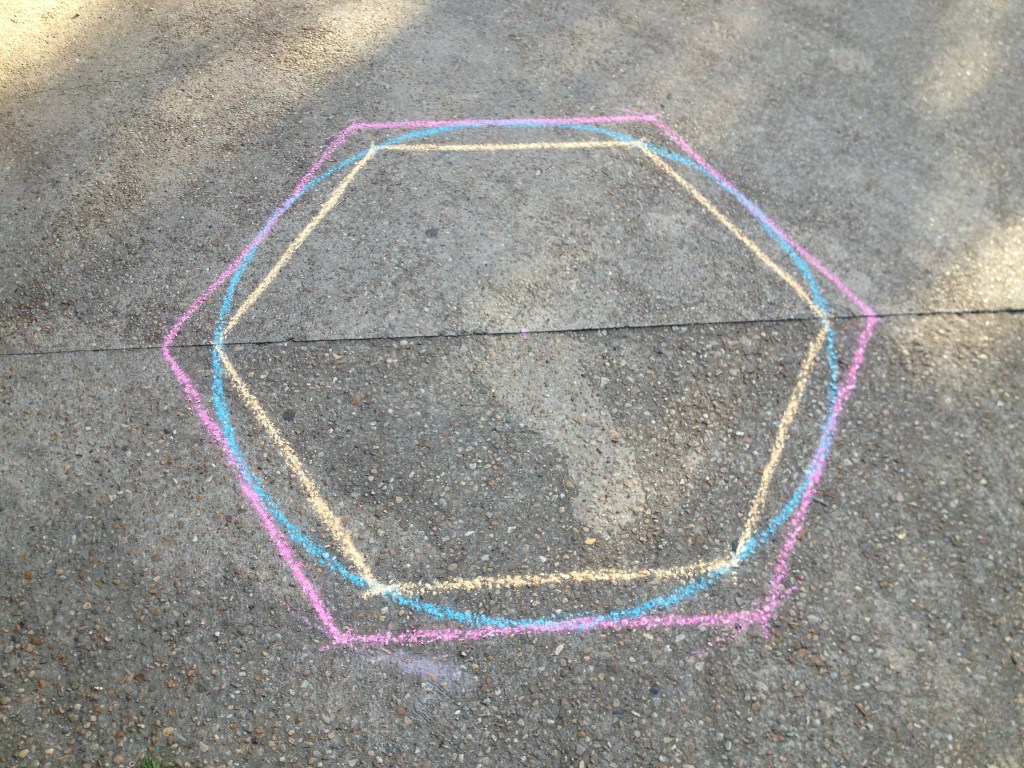
In proposition 3 of his paper, Measurement of a Circle, he approximated the circle with small measurable lengths of straight lines in the form of polygons inscribing and circumscribing the circle.[π]
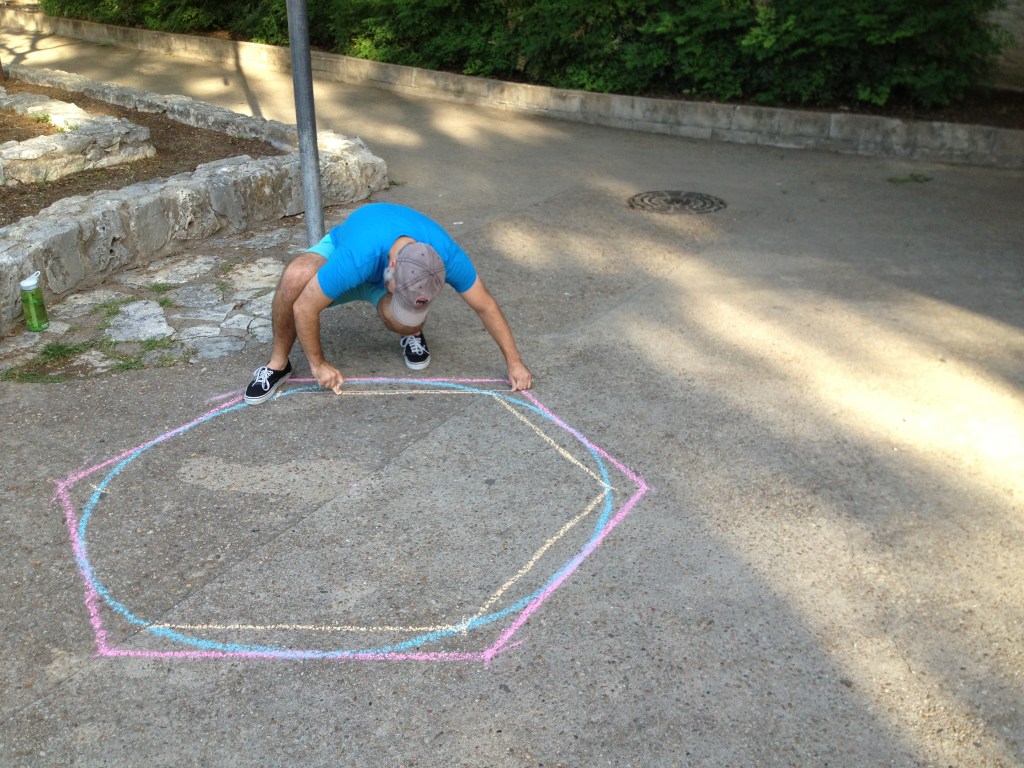
In contemplating Archimedes’ approach, you might discover how this approximation got better as his polygons got more sides. The inscribed polygons underestimate the circumference while the circumscriptions overestimate the circumference. That way, the actual circumference gets squeezed to its rightful value as the polygons get closer to one another and the approximations improve.
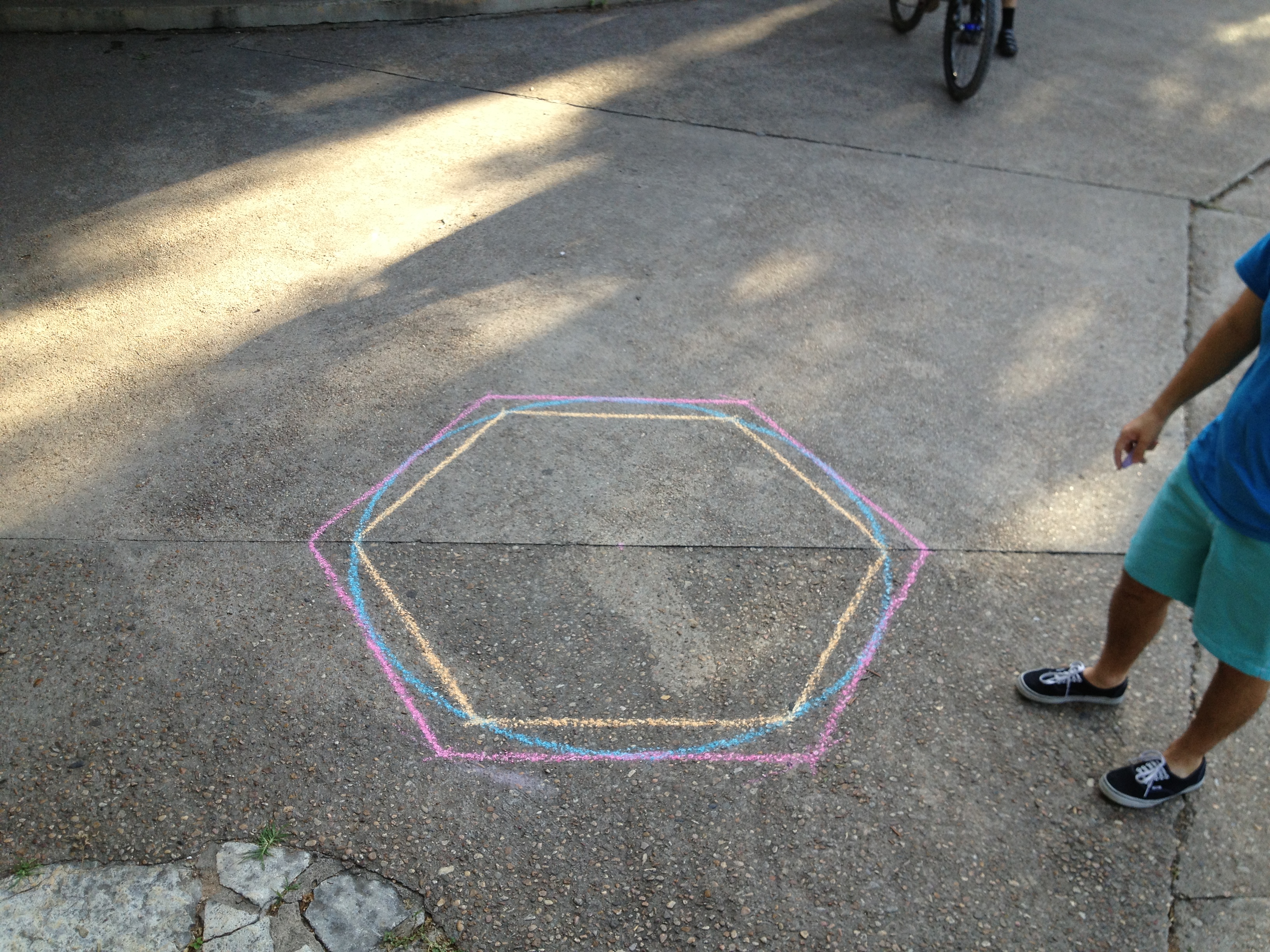
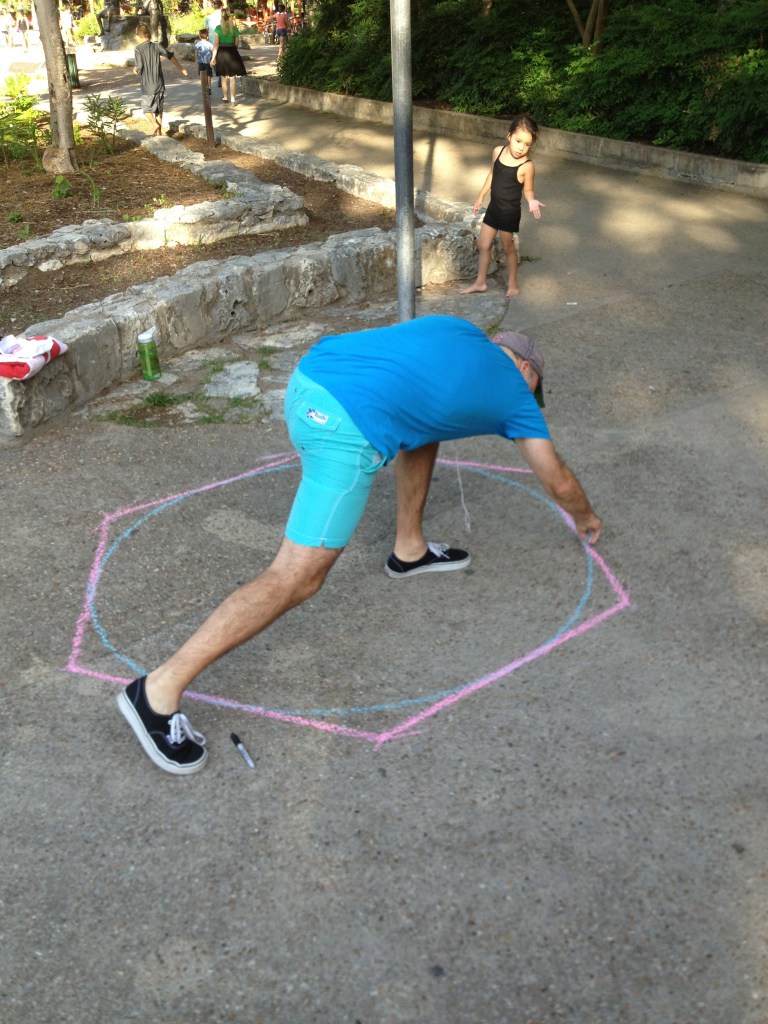
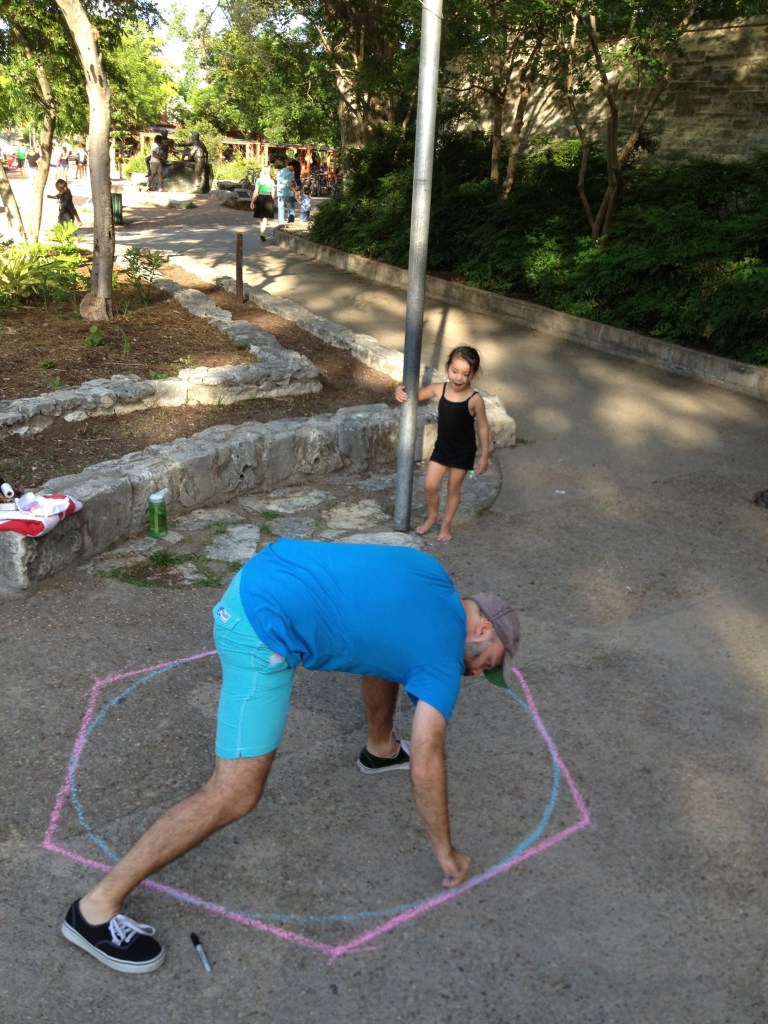
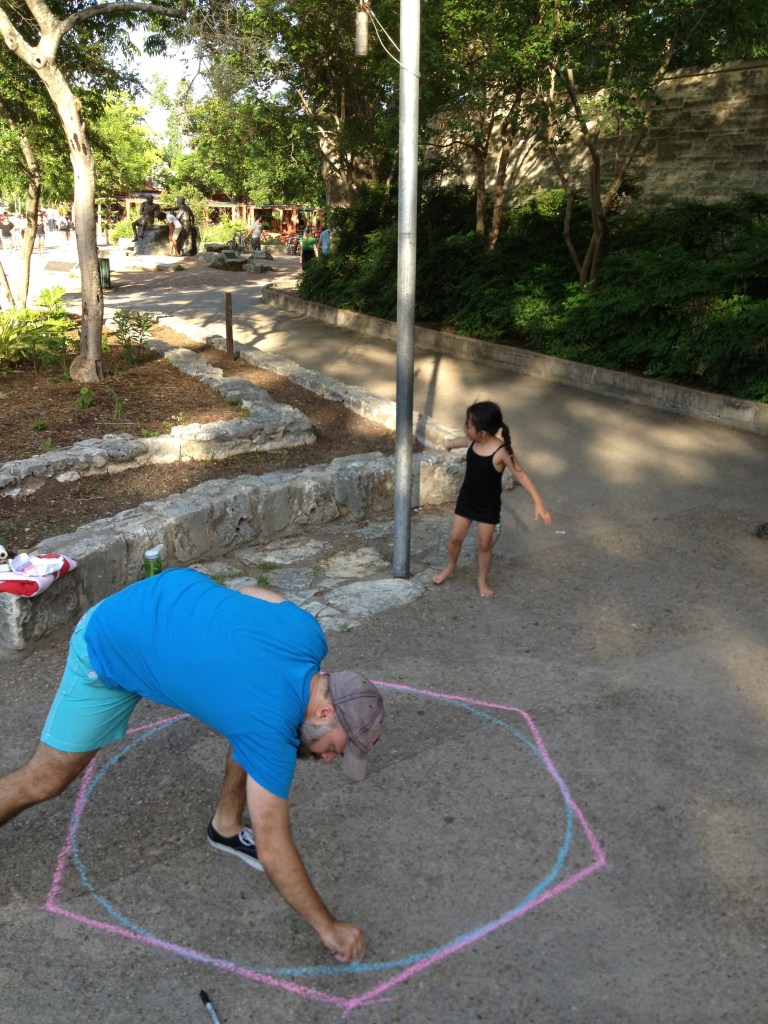
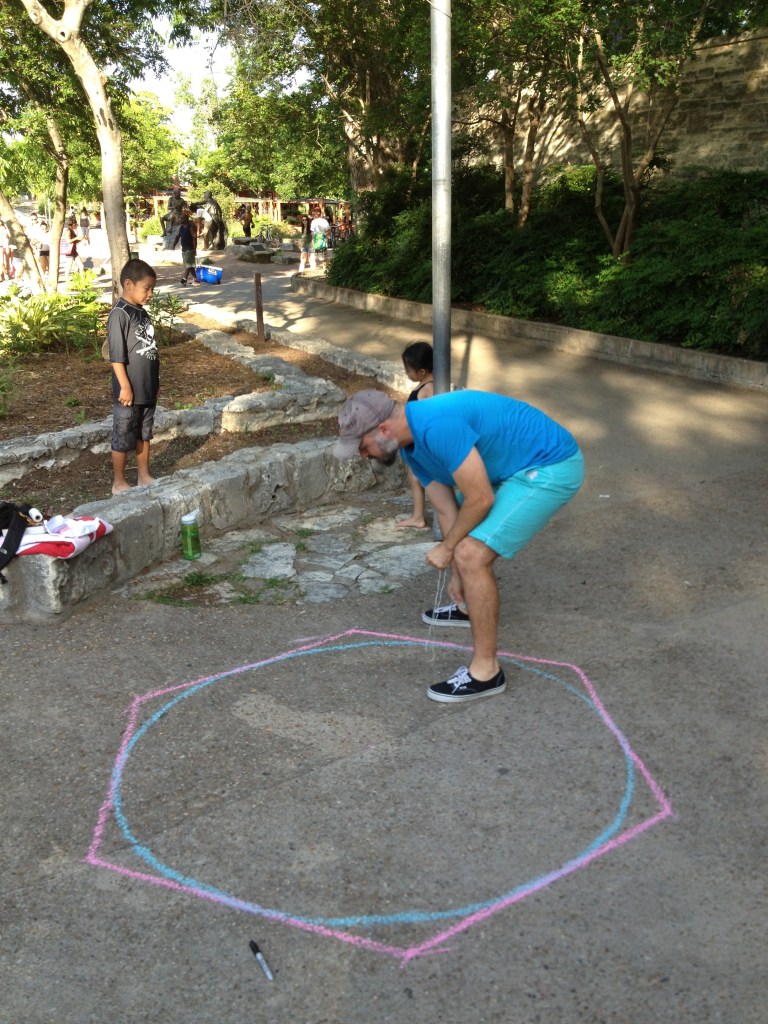
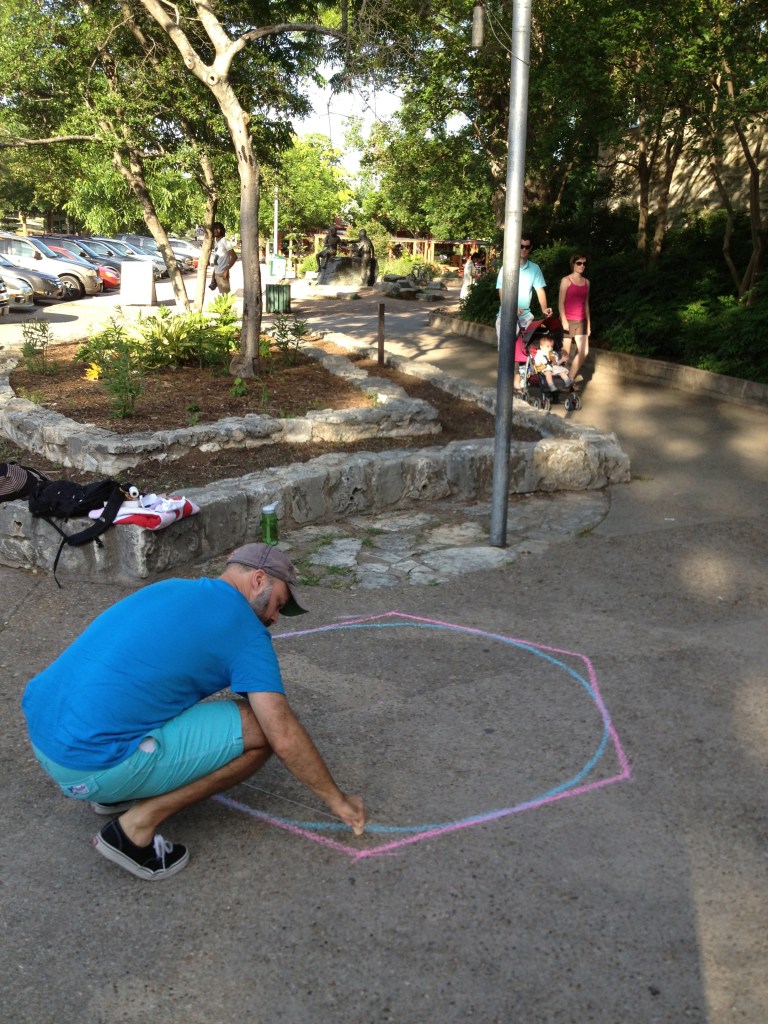
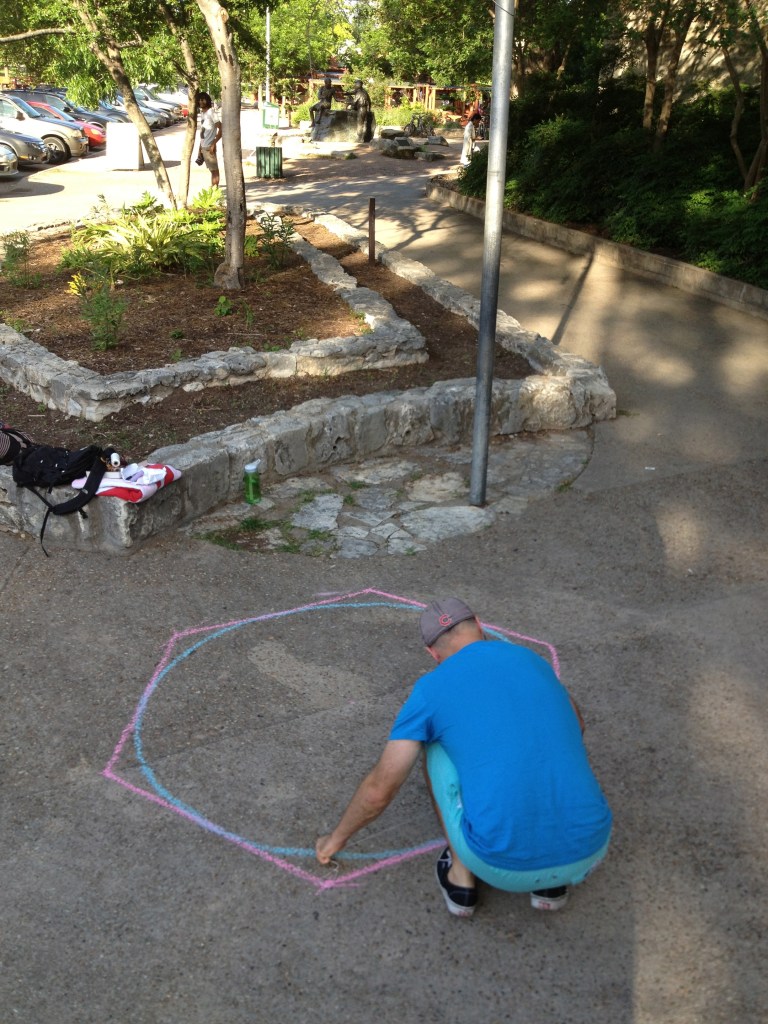
Archimedes took his polygons up to 96 sides. (I only drew hexagons, and that took some work.) He didn’t draw the 96-gon. He didn’t need to. The polygons were regular—they had sides of equal length just like an equilateral triangle or a square. If you know the length of one side of square, you know its perimeter. (Provided you can multiply by 4. The same sort of notion works for a regular hexagon (6 sides), a dodecagon (12 sides), and so on.)
Could Archimedes let the number of sides of his polygons go to infinity and still add them up? For sure. Mathematicians did it in the 1600s. If you read a recent post, you know there are instances when the sum of infinitely many numbers can be finite. There is a Wikipedia article that mentions Kepler using this infinitesimal approach with Archimedes’ polygons.
Kepler was working on area of a circle, not the circumference. Both circumference and area involve π. The ratio of the area of circle to the square of the length of its radius is also π.

You are probably used to seeing it like this:

That is more familiar, huh?
Now, about the multitude of π resources. Google it. You might get about 448,000,000 results in less than a second.
Bill Casselman of the University of British Columbia wrote an article for The American Mathematical Society, Archimedes on the Circumference and Area of a Circle, tackling a treatment of, “subtle points about Archimedes’ treatise that seem not to be widely appreciated.” Subtle points are good. Check it out.
The PBS: NOVA site has an interactive tool for approximating π using the methods of Archimedes. Go to that site. Then, find a bathtub, sit in it, and think about π. Maybe, you’ll holler “Eureka!”
One of my favorite resources, though text heavy, is the MacTutor History of Math archive. It has a chronology of pi with both pre and post computer approximations. The earliest is from the Rhind papyrus circa 2000 BC, correct to one digit after the decimal. The most recent approximation mentioned on the page is from Takahashi Kanada with 206,158,430,000 digits. (Yes, that is over 200 billion digits.)
In October 2011, some folks got the number of digits up to 10 trillion. Good job! See details of their work on http://www.numberworld.org/y-cruncher/.
It you want to see the first 100,000 digits of π, go here.
If you have a favorite book, site, joke, et cetera about π, please leave some breadcrumbs in a comment.
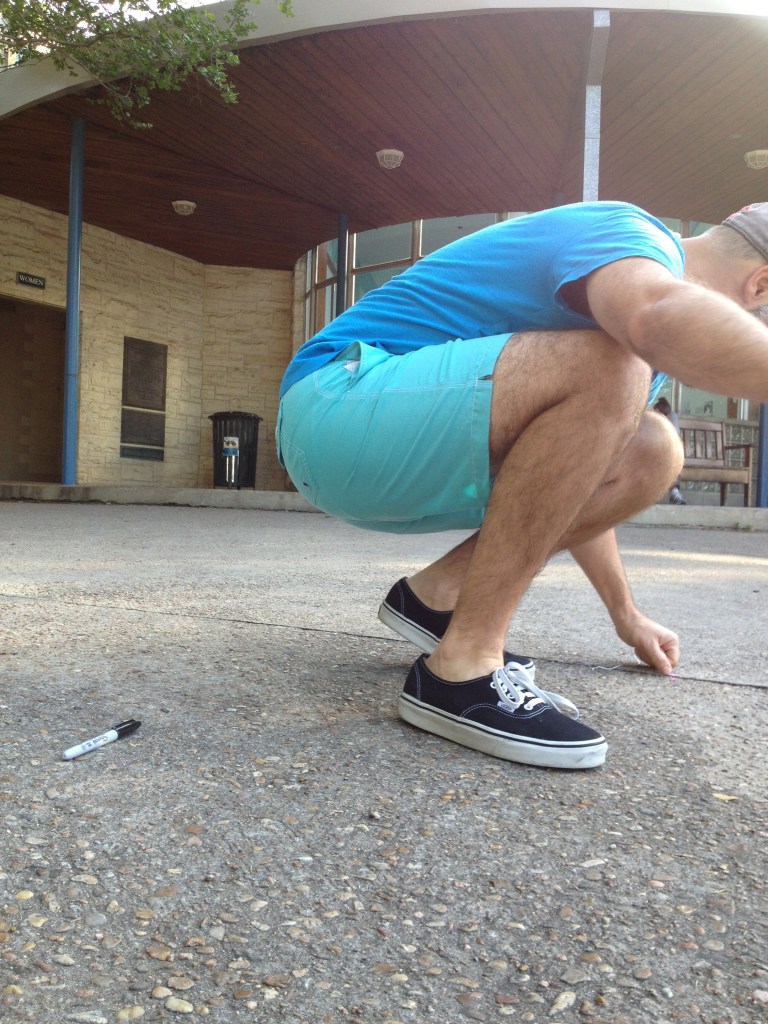
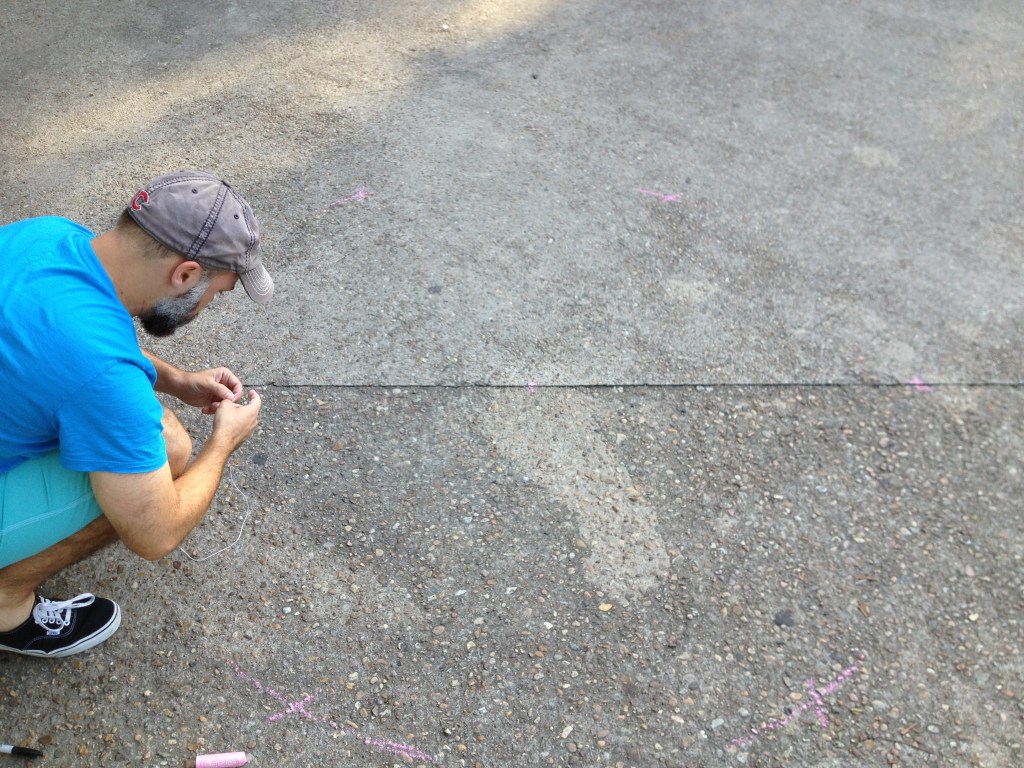
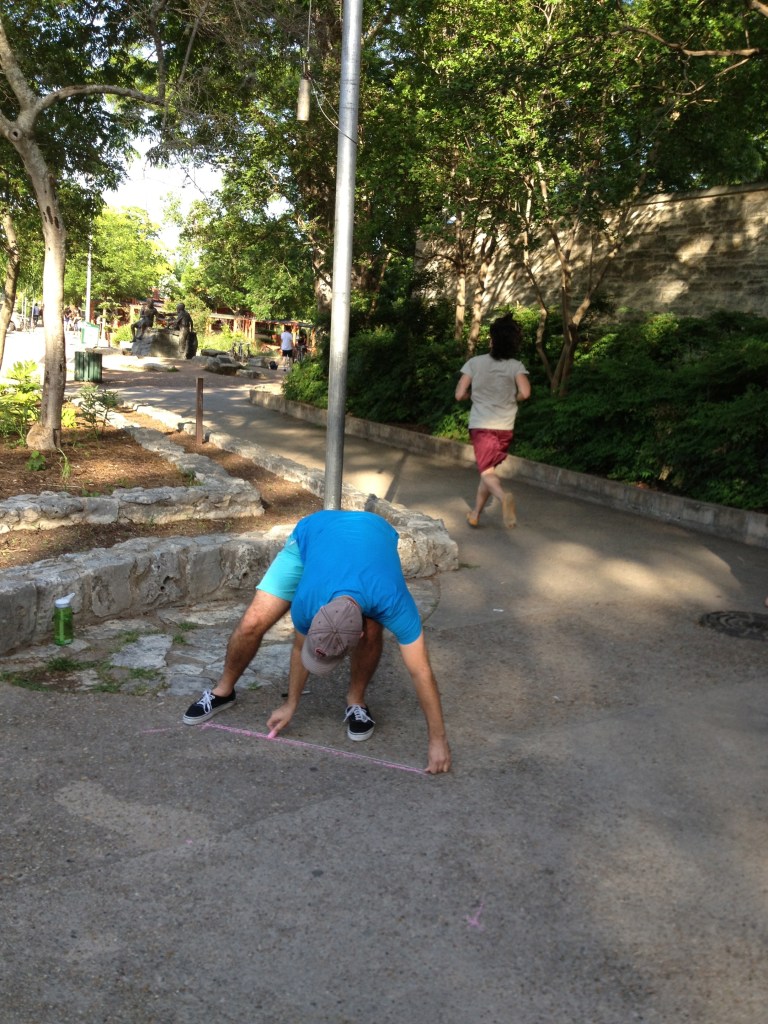
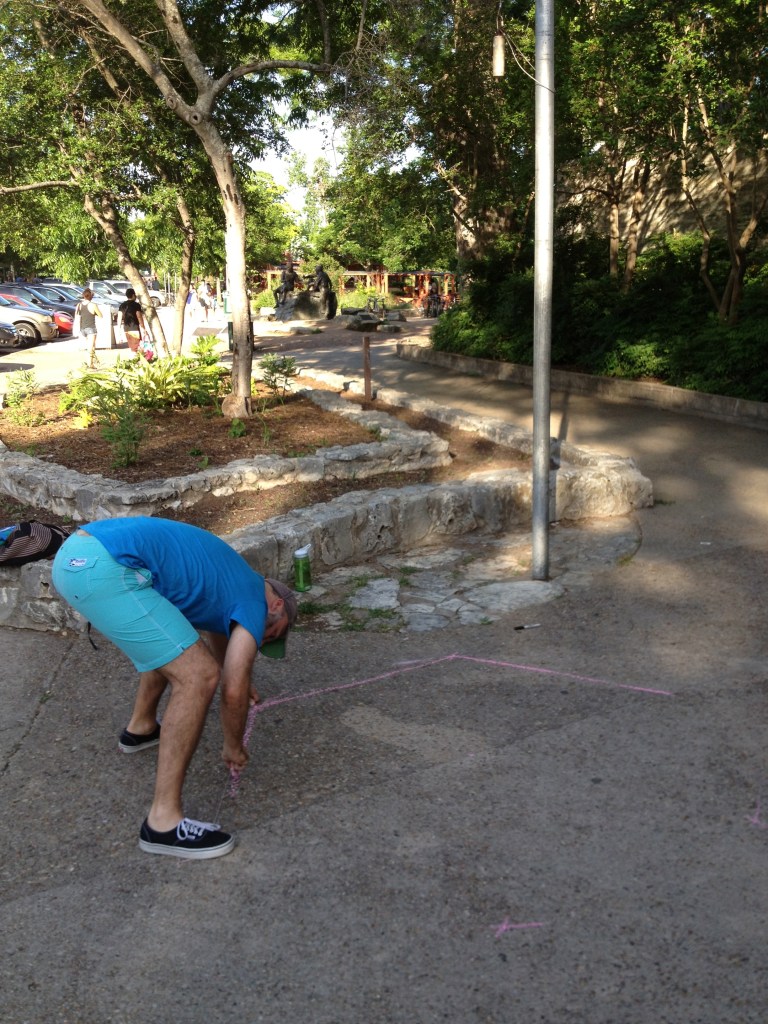
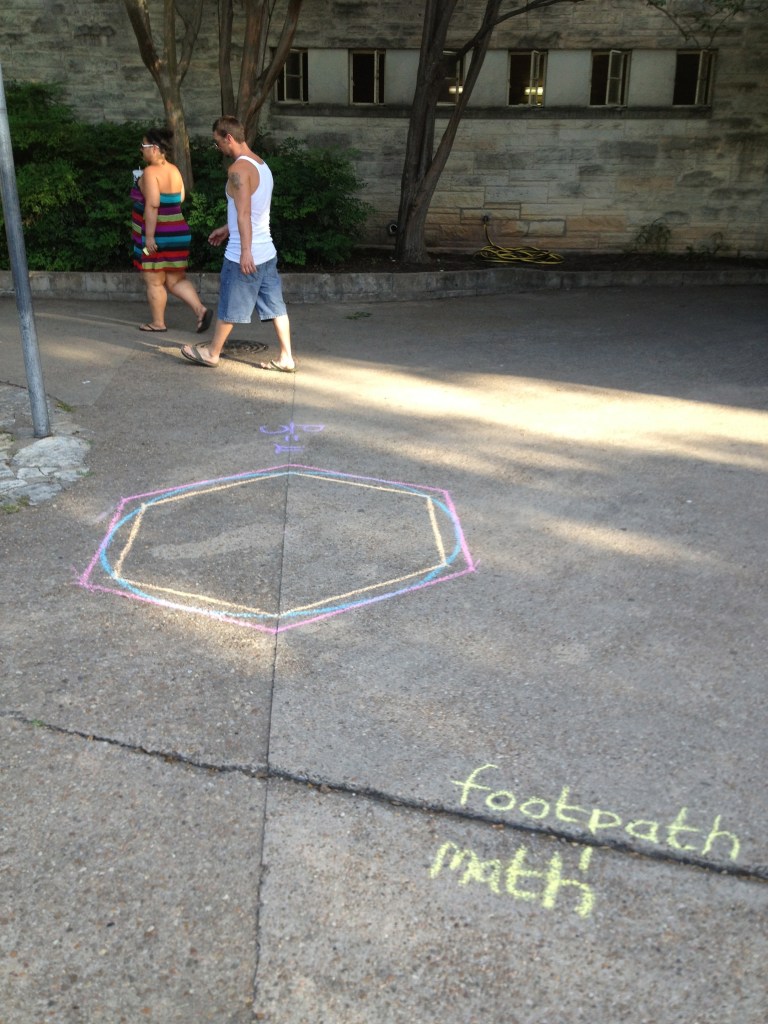
The lovely Jaclyn Faulkner took photos. Then, we went and jumped off the diving board into the spring-fed pool in downtown Austin. Thank you, Jaclyn.







√2^ That ratio is always √2. We saw it under a bridge in a post from last December.
π.^ What was left of Archimedes’ papers was preserved in T.L. Heath’s book The Works of Archimedes, published in 1897 by Cambridge University Press. The text is available online through Internet Archive in various forms. Archimedes’ paper Measurement of a Circle with Heath’s notes is here.
 Footpath Math: Chalk it up to a math geek
6 thoughts on “π”