
Austin TX
 Some people have favorite numbers. According to a global online poll, 7 is the world’s favorite. I admit I fancy 7, maybe because I have 6 siblings or because seven ate nine. Either way, there is a number I fancy more than 7.
The number e has made an appearance in previous posts[1], most recently in Euler’s formula. Approximately 2.71828, e is an irrational number. Like π, e cannot be written as a fraction, and its decimal form has infinitely many digits with no global repetition of pattern.
As early as 1731, Euler used the symbol e to reference a numerical value appearing in one of Napier’s texts from 1618.[2] Napier came across the value in his study of logarithms.[3] Before Euler dubbed the value, Jacob Bernoulli gave it definition.
 Jacob was born in Switzerland in 1654, only four years after Descartes’ passing, as the Age of Enlightenment was spreading its roots. Jacob produced ground-breaking work in probability theory and differential equations. Jacob and his brother Johann were among the world’s leading mathematicians at the end of the 17th century. They studied, used, and expanded on the ideas from Leibniz’s 1684 paper which unleashed calculus on the world. Jacob and Johann didn’t always get along. Things got down right nasty, but they started a mathematical dynasty despite the spite.[4] After becoming a professor at the University of Basel in 1687, Jacob advised his younger brother Johann. Johann then advised Euler. Euler advised Lagrange, who in turn advised Fourier.[5]
Jacob Bernoulli’s definition of e was born of a question about compound interest. In a recent post, you saw how the money you save or borrow grows under the powerful influence of compound interest. You may recognize the formula for the amount (A) you would have after time (t).
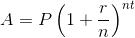
The formula uses P for the principal, r for the interest rate, and n as the number of interest payments per year. In that post, you also saw how money grows faster with larger values of n, i.e. with more frequent interest payments per year.
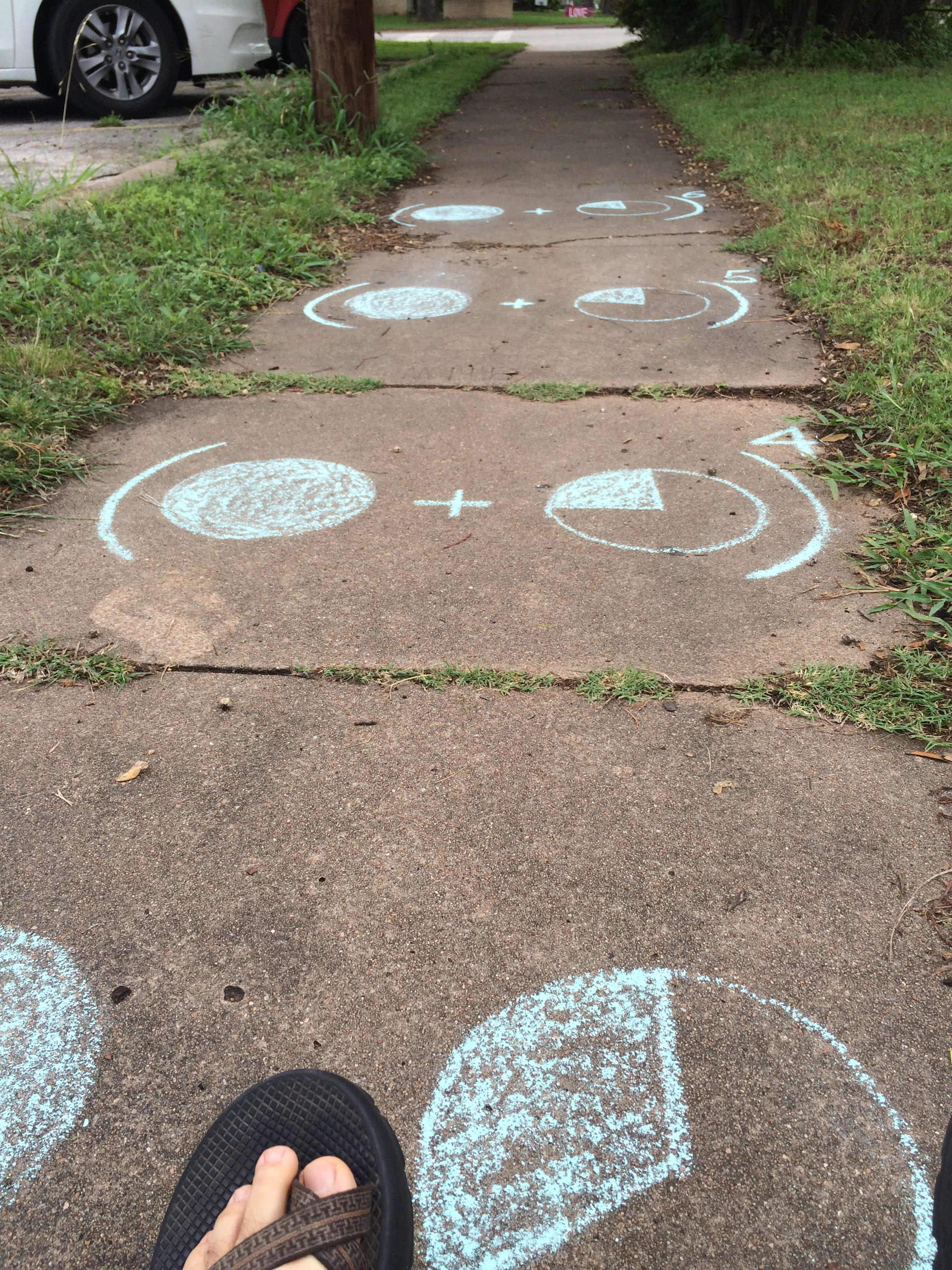
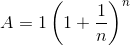
Bernoulli’s inquiry into compound interest was in response to a problem posed in 1685. Five years later, in the journal Acta eruditorum, Jacob Bernoulli asked[6] what would happen to a sum of money if interest were compounded at every moment for a year. Using the formula for compound interest, we can investigate Bernoulli’s question by asking what happens to A if the number of compoundings (n) heads off to infinity when P, r, and t are set equal to 1.
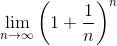
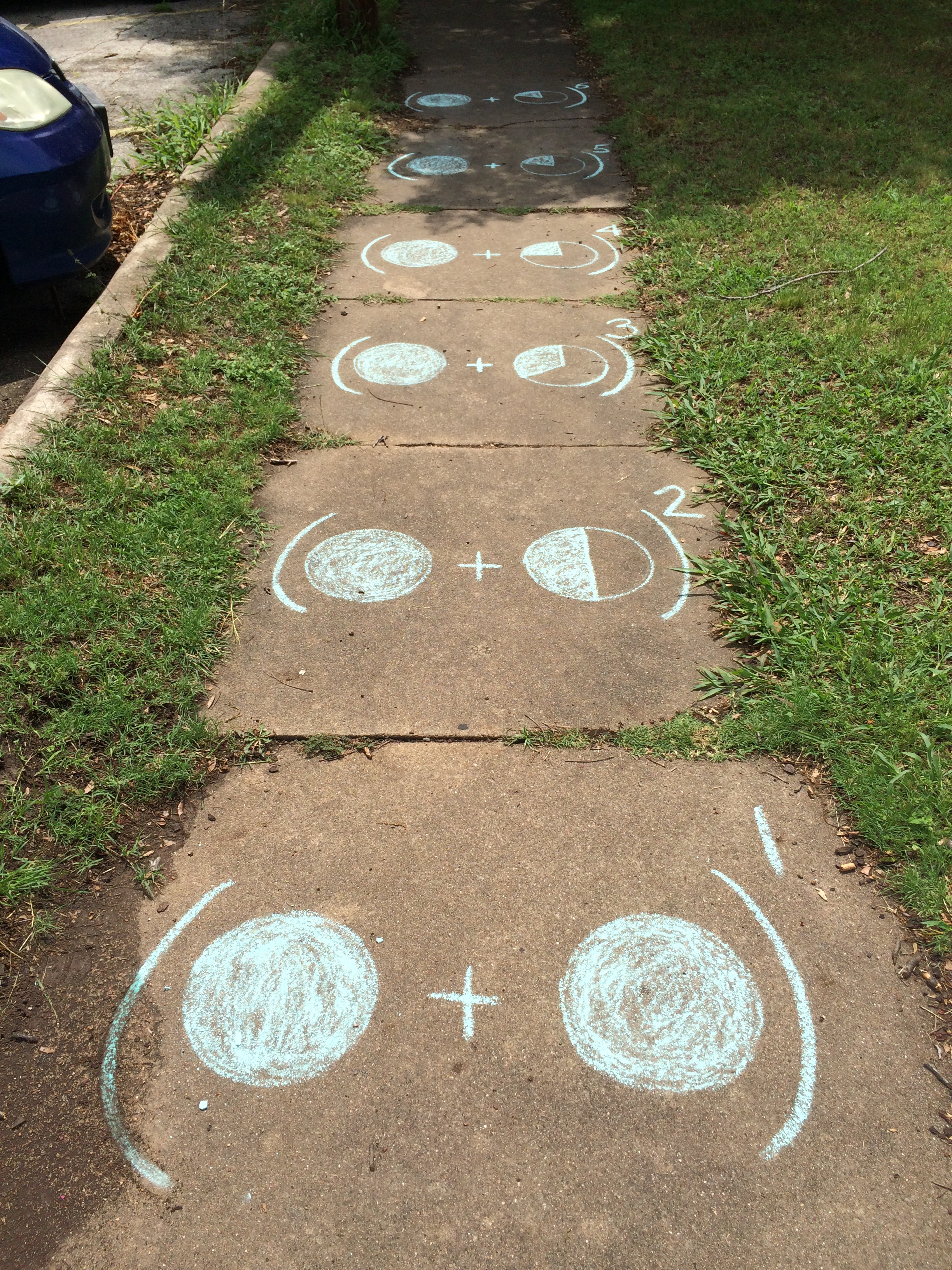
Bernoulli’s work determined the value of this limit to be between 2 and 3. Mathematicians used this definition to give us more precise approximations. In 1748, Euler gave us 18 digits.[7]






Afterthought
You may have noticed that setting r = 1 in the same as having an interest rate of 100%. While no legitimate bank is going to offer you 100% annual interest, exponential growth applies to phenomena other than money. The number of bacteria, deer, or coyote in a population may very well double over the course of a year. Life doesn’t wait until the end of each month to add to itself—to compound its interest. Populations of living organisms grow continuously. Baby deer aren’t born exclusively on the 15th of each month. They are born every moment.[8]
If you want to investigate the limit Jacob was considering, let’s stick with money and pretend we find a bank (or a wealthy friend) offering us 100% interest.[9] Give that friendly banker one dollar for one year and set P, r, and t all equal to one.
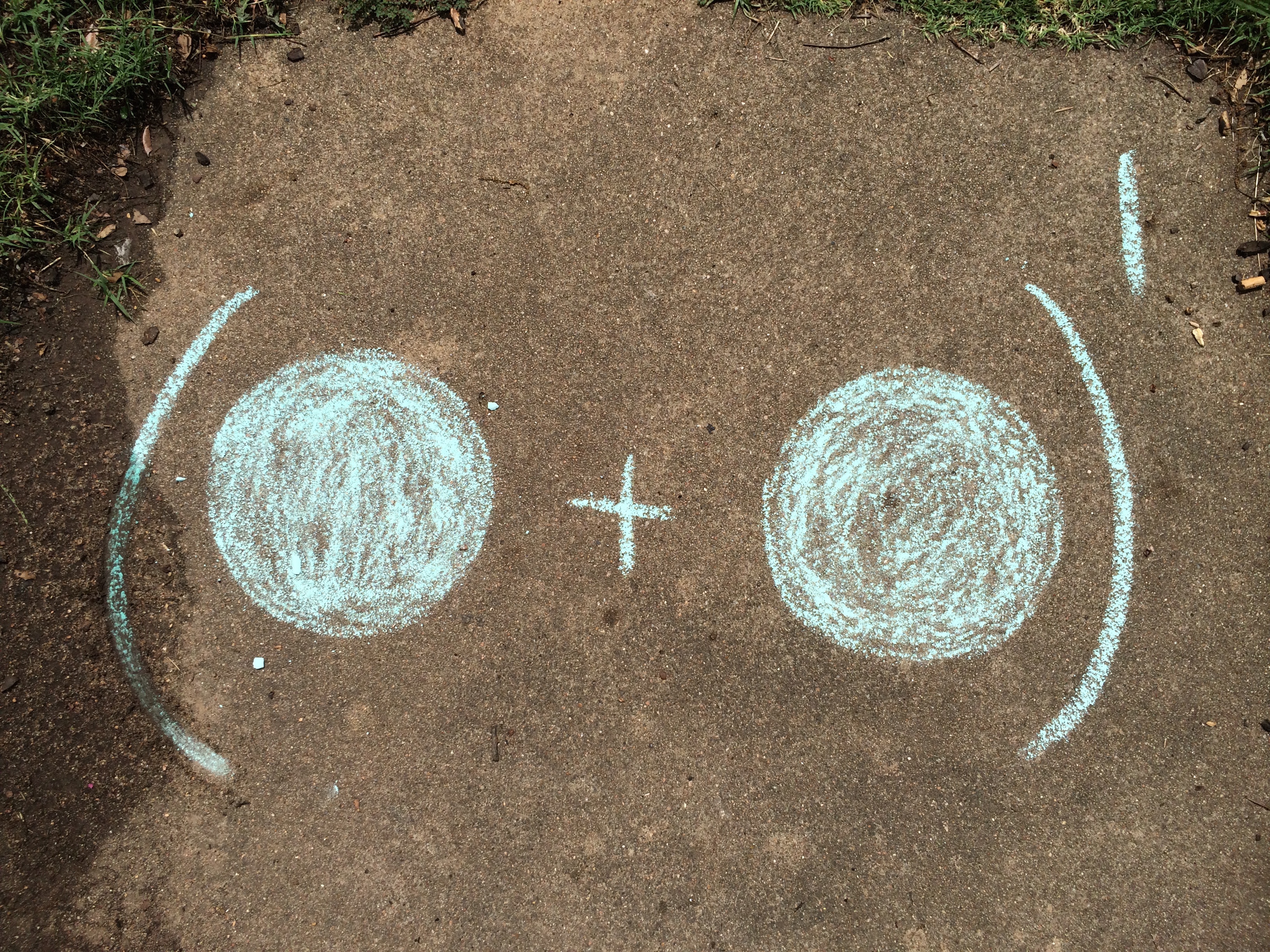
If the banker only pays interest once, then n = 1 and you would have $2 at the end of the year.

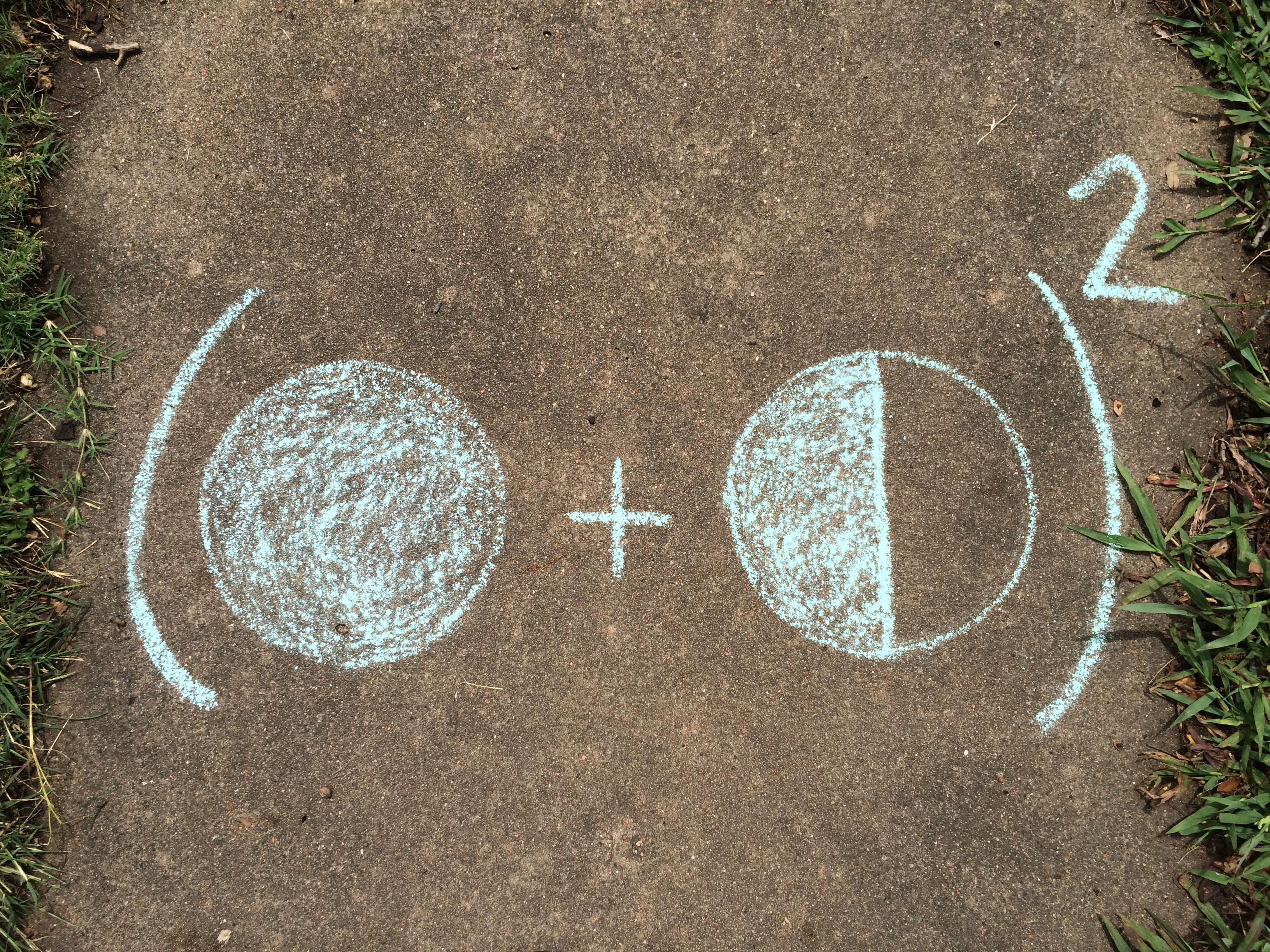
What happens to your dollar if the banker was willing to compound the interest more frequently? That is, what happens when n gets bigger?
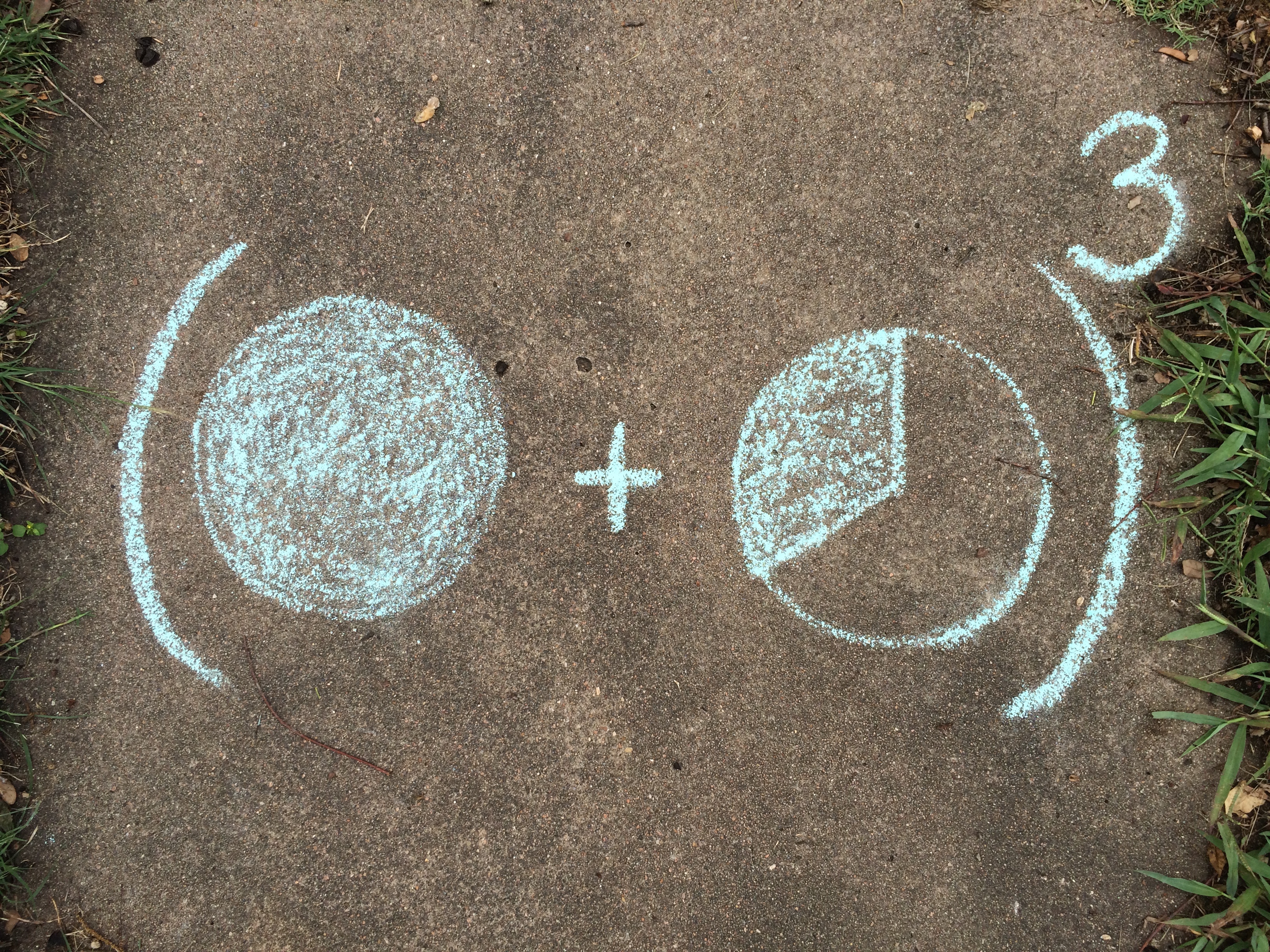
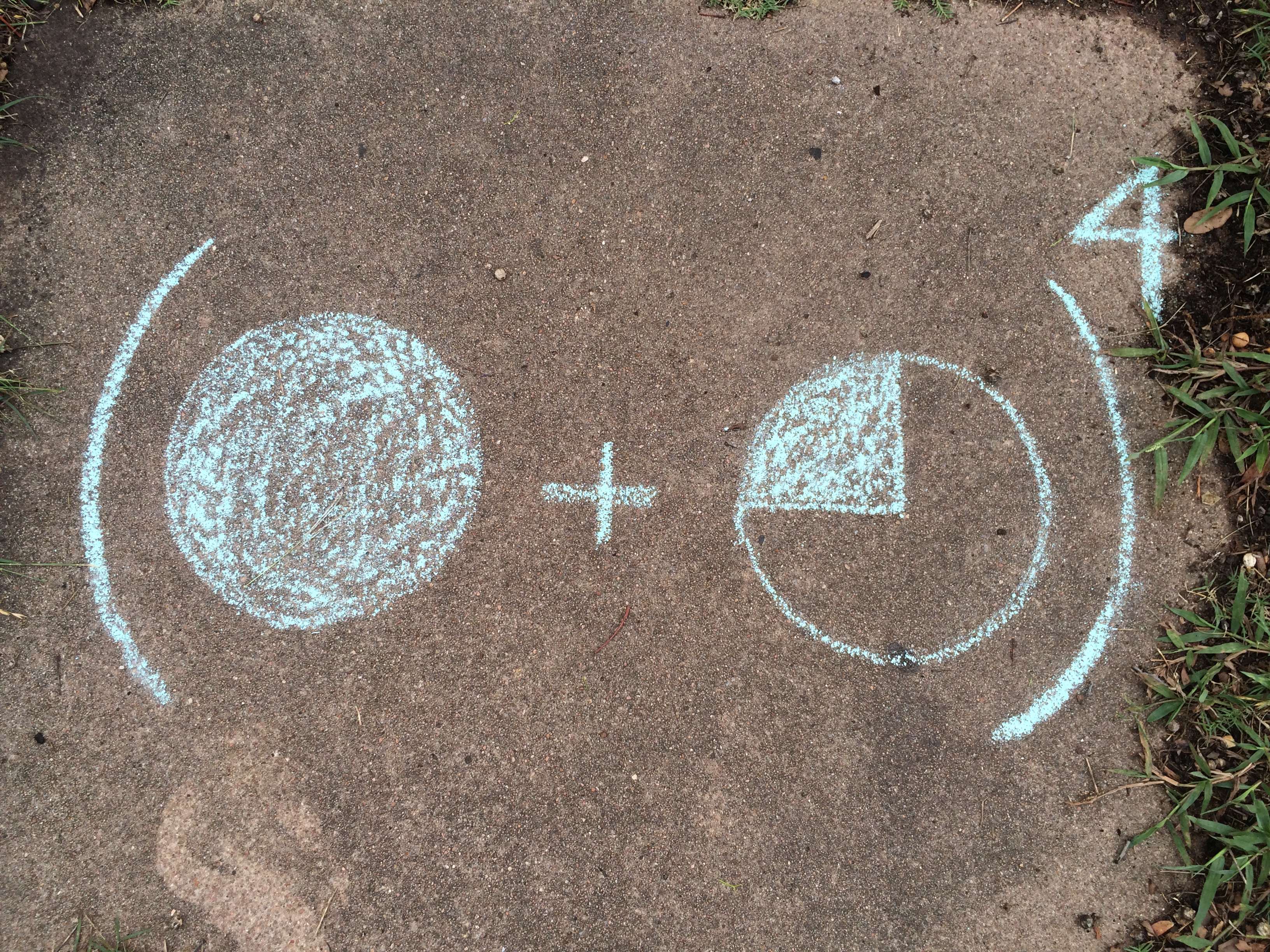
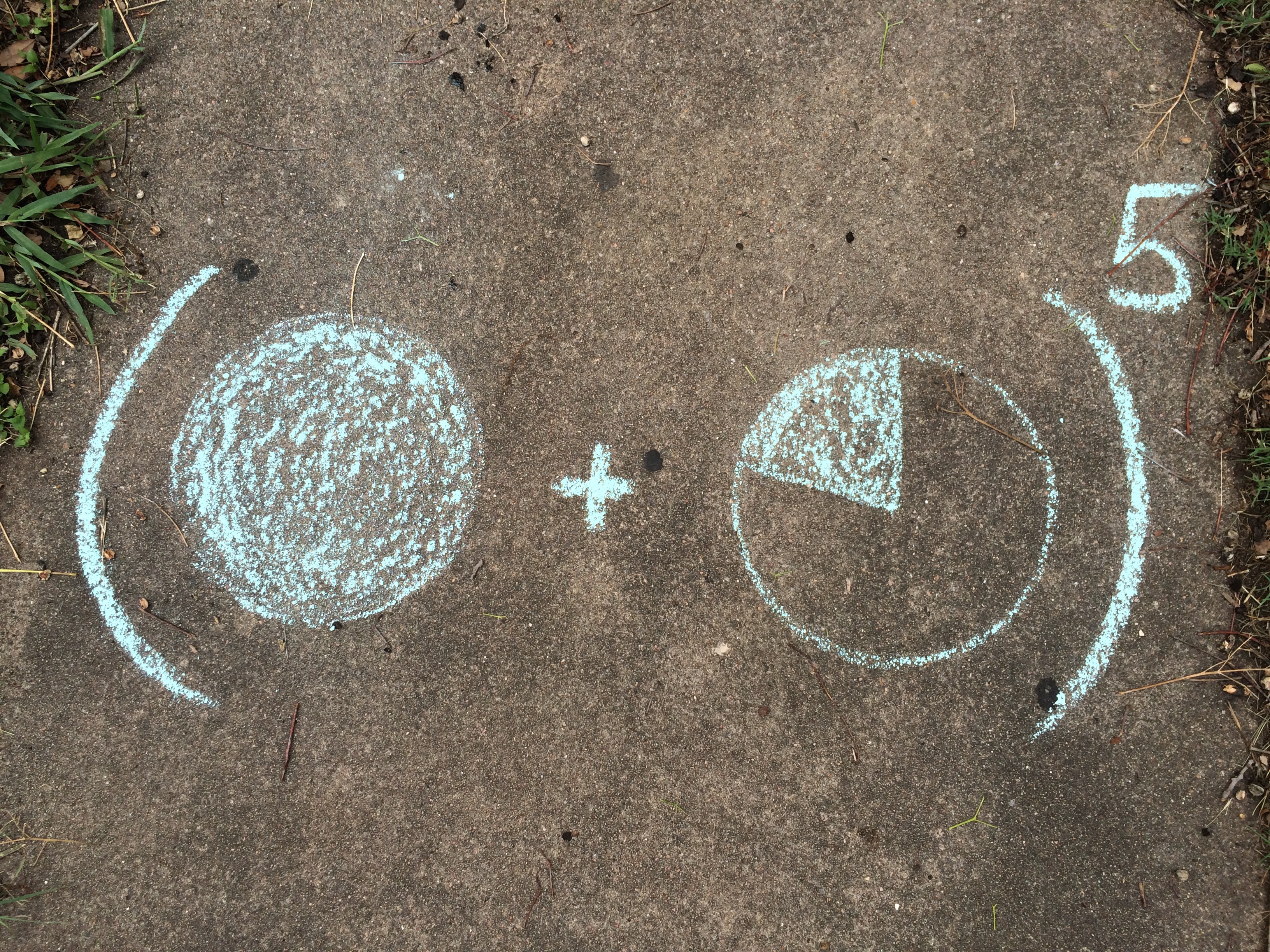
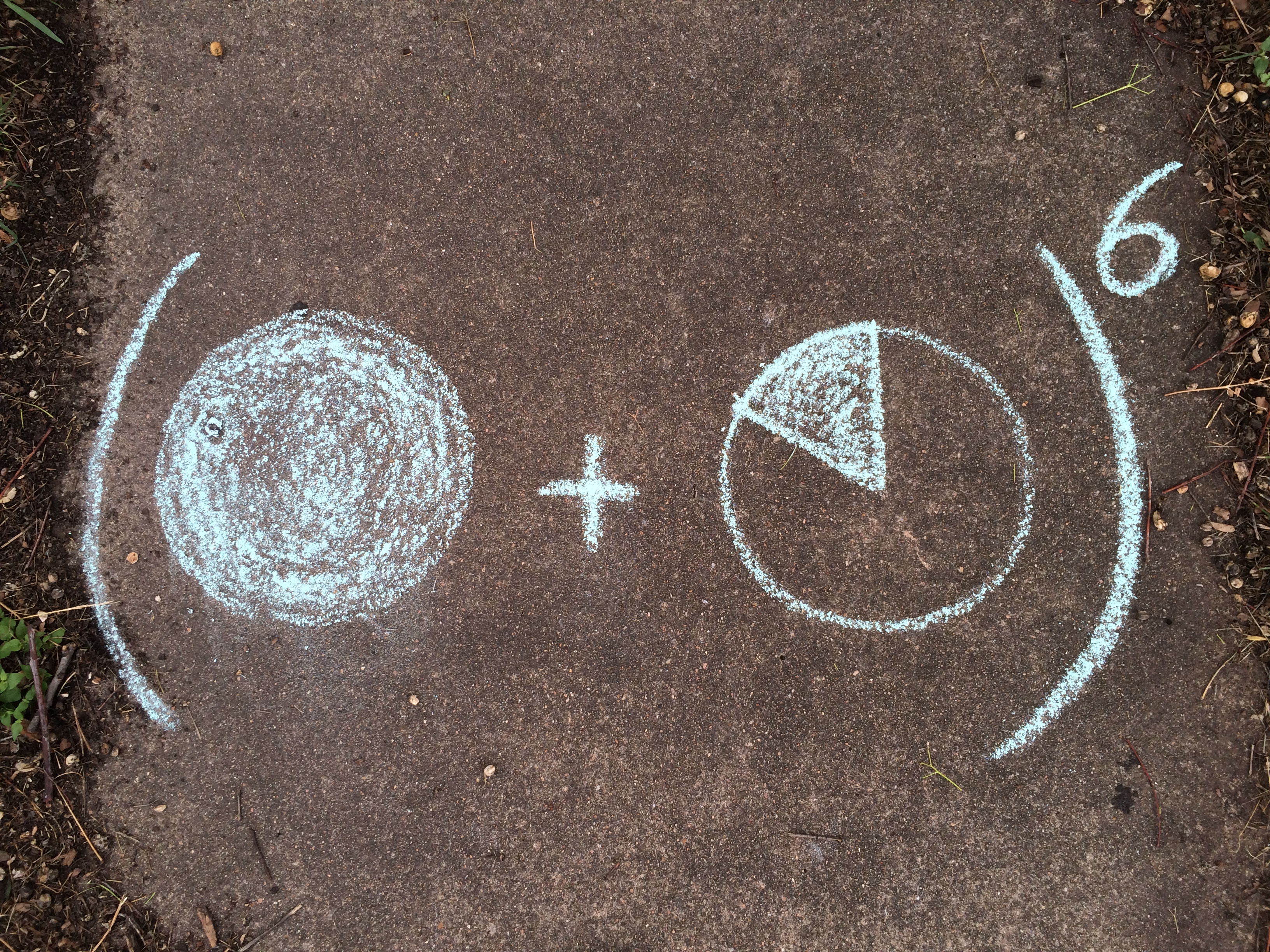
| Frequency | n | Amount (A) |
| Monthly | 12 | 2.613035290224592 |
| Daily | 365 | 2.714567482024386 |
| Hourly | 8760 | 2.718126691591475 |
| Minutely | 525600 | 2.718279243935318 |
| Secondly | 31536000 | 2.718281607158574 |
As you might expect, compounding more frequently leaves more in the bank at the end of the year. If we let n head to infinity, the value of (1+1/n)n will not head of to infinity, despite what intuition might suggest. The value stays between 2 and 3, as Jacob Bernoulli determined, and heads toward the value Euler called e.
1.↑ e first appeared in Footpath Math at the Gateway Arch in St. Louis.
2.↑ The MacTutor History of Mathematics archive provides a detailed history of the appearance and development of e.
3.↑ Don’t let logarithms scare you. When Napier brought them forth, logarithms were a tool for simplifying arithmetic. logarithm = logos + arithmos: a logical way to do arithmetic. These days, we think of logarithms as exponents. Since two to the third power is eight, the logarithm base two of eight is three. Words are tough; let’s try symbols.

Three, the exponent, is the logarithm (base two of eight, not the in some ultimate sense).
4.↑ For a more complete account of Jacob’s life and work, including his relationship with Johann, see the biography of Jacob Bernoulli in The MacTutor History of Mathematics archive.
5.↑ Advised refers to overseeing work on a dissertation for an advanced degree. The chain of students can be seen starting from The Mathematics Genealogy Project page for Jacob Bernoulli. Also notice Johann’s children and grandchildren continued the tradition of solving important mathematical problems.
6.↑ In 1690, in the journal Acta eruditorum, Bernoulli asked, “si creditor aliquis pecuniæ summam fænori exponat, ea lege, ut singulis momentis pars proportionalis usuræ annuæ sorti annumeretur; quantum ipsi finito anno debeatur?” In modern terms, he is asking how much would be on account if interest were compounded continuously, i.e. at every moment proportional to the amount on account. This question was posed by Fred in response to a recent post.
7.↑ The number e in the MacTutor History of Mathematics archive offers more details in between. Also, Eli Maor’s e: The Story of Number, Princton U.P., 1994 includes an explanation of Jacob’s work showing the bounds of 2 and 3 for the limit.
As for the number of digits, e hasn’t sent droves of people in search of its digits as π has done. Still, some folks have made an effort. Here is page with the first 5 million digits provided by Robert Nemiroff and Jerry Bonnell of NASA Goddard Space Flight Center. In the note on the page, the digits “were computed during spare time on a VAX alpha class machine over the course of a weekend.”
Note: I found the 5 million digits page amongst a hearty list of ideas and resources about e in the The On-Line Encyclopedia of Integer Sequences® (OEIS®). I found that page from the Wolfram MathWorld page on e.
8.↑ Look around many major cities. Have you have seen the deer? Now, I am no biologist. From what I understand, in the 1900s we scaled back on hunting deer, we built subdivisions in their homelands, and we killed off some of their natural predators such as bears and wolves. Hence, a population bloom.
9.↑ This investigation is described on page 26 of Eli Maor, e: The Story of Number, Princton U.P., 1994.
 Footpath Math: Chalk it up to a math geek
3 thoughts on “e”