
 You may have met the complex numbers. Gauss named them in 1831, but our knowledge of complex numbers was born in the first half of the 16th century in northern Italy with attempts to solve cubic equations. Leveraging knowledge from Tartaglia, Girolama Cardano published his findings in his book Ars Magna in 1545.
Complex numbers have a real part and an imaginary part. For example, s = 4 + 3i is a complex number with Re(s) = 4 and Im(s) = 3. Real numbers are a subset of the complex numbers: just let the imaginary part be zero, as in 17 + 0i.
Descartes seems to be the source of the “imaginary” status. Leibniz touched the complex numbers in the mid-1600s. A century later, Euler gave us his formula and seems to be the first to use i to represent the square root of –1.
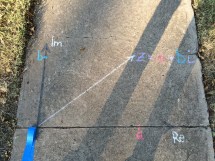 Then, interesting things happened when we attempted to be Cartesian. If we take the xy-plane and use the x-axis for real numbers and the y-axis for imaginary numbers, then we find ourselves in the complex plane.
If you haven’t noticed, mathematics is a world of questions. Some people call them problems, but I find “questions” a bit more encouraging. Here is one.
How far is s = 4 + 3i from the origin?
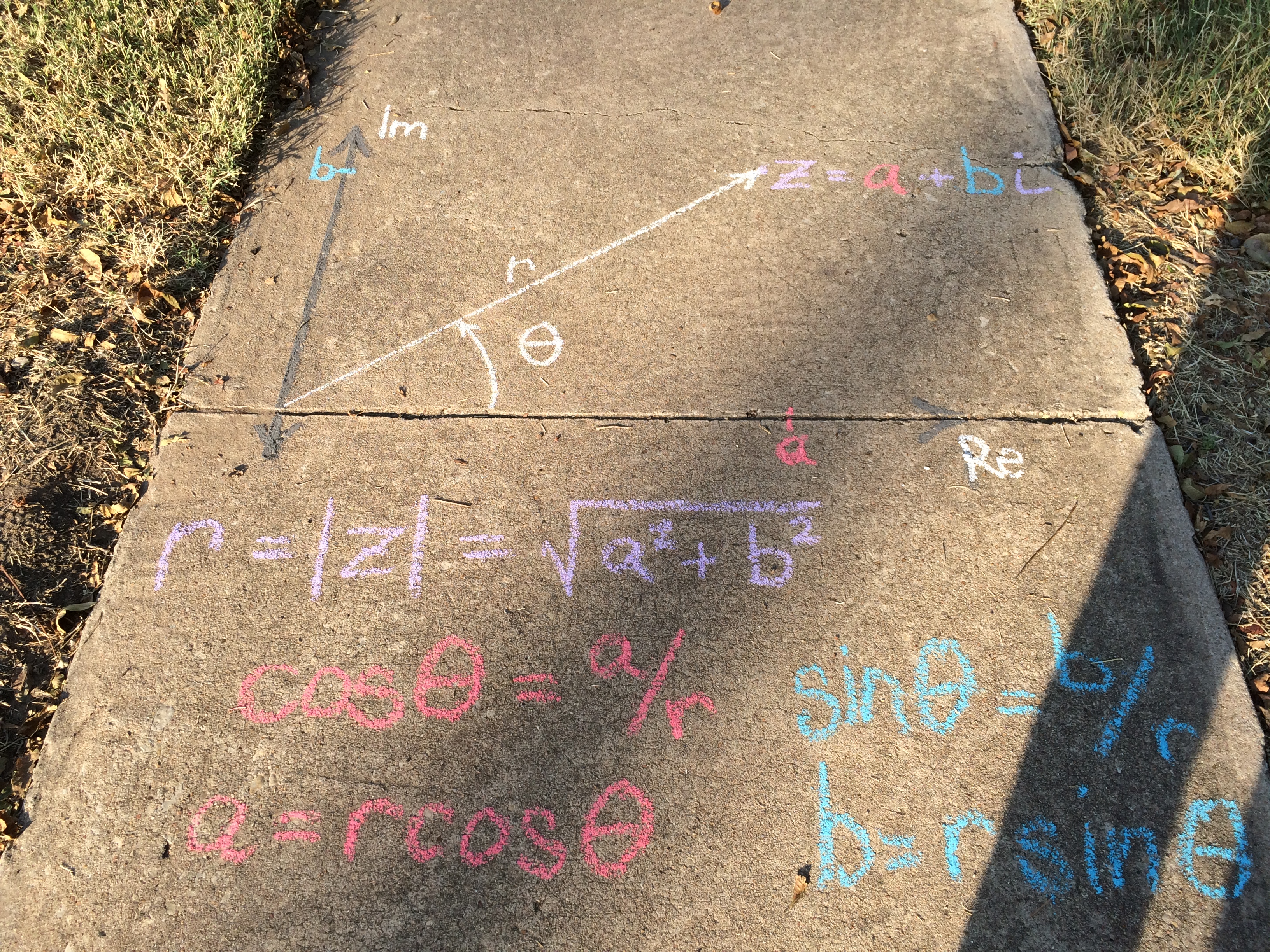
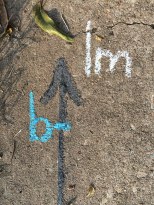 Let’s investigate a general case first. If z = a + bi, then find the magnitude, or modulus, of z, |z|, by using the Pythagorean theorem.


Now, do this for s = 4 + 3i.

That means |s| = 5. As with absolute value, the modulus of a complex number is its distance from zero, in this case the origin, 0 + oi.
 In 1797, Caspar Wessel, a Norwegian land surveyor in his early 50s, presented a paper to the Royal Danish Academy of Sciences. Wessel’s paper includes geometrical interpretations of addition and multiplication of complex numbers. Unfortunately, Wessel’s work was lost for decades.
Many others were hot on the trail.
Jean-Robert Argand, a Swiss-born accountant working in Paris, and the great Carl Friedrich Gauss reproduced Wessel’s findings in the following decade. There was enough mathematical machinery in place to bring geometry and trigonometry to bear on analytical problems. Wessel, Argand, Gauss, and others showed us how.
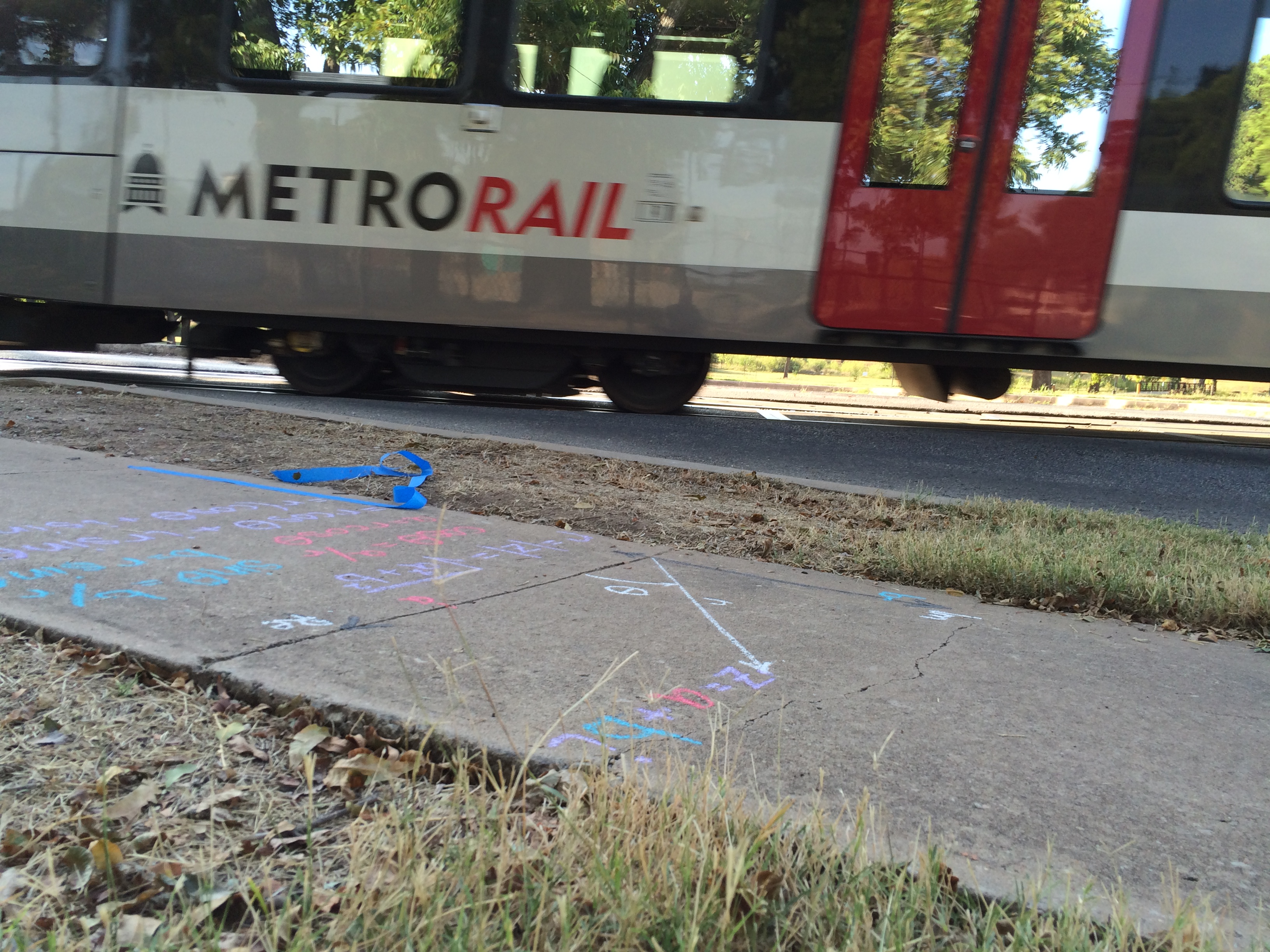

Multiply by r to solve for a and b.

With a bit of substitution, z = a + ib can be rewritten in polar form. (I did commute the b and the i. Totally legit, I promise.)

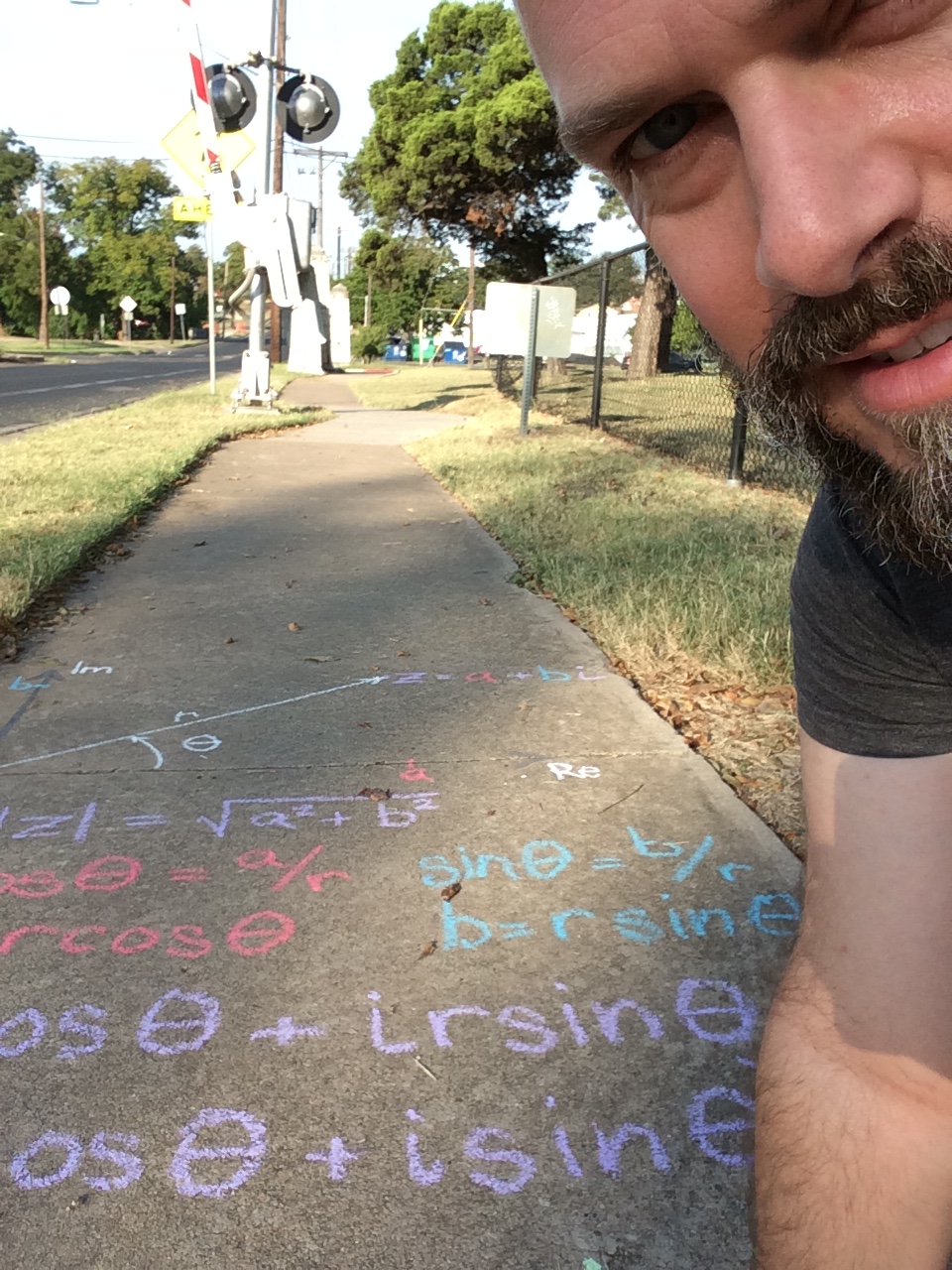 If we factor out the r, something might catch your eye.

Since the expression in parentheses is the right-hand side of Euler’s formula, let’s use it.

Putting this last equation to work on a polar form for z gives us the following.

Now, that is a number! We are going to be able to do some good work with this form of z.


Both Argand and Gauss went on to prove the Fundamental Theorem of Algebra, a conjecture deeply rooted in complex numbers. Gauss’s reputation and work brought complex numbers out of the shame of being “imaginary” to the well-deserved superset status.



References
Ball, W.W.R. A Short Account of the History of Mathematics. Macmillan & Co., LTD. 1912.
Nahin, Paul J. An Imaginary Tale. Princeton University Press, 1998.
O’Connor, John J.; Robertson, Edmund F., “Caspar Wessel.” From MacTutor History of Mathematics archive, University of St Andrews. http://www-history.mcs.st-andrews.ac.uk/Biographies/Wessel.html
O’Connor, John J.; Robertson, Edmund F., “Fundamental Theorem of Algebra.” From MacTutor History of Mathematics archive, University of St Andrews. http://www-history.mcs.st-andrews.ac.uk/HistTopics/Fund_theorem_of_algebra.html
 Footpath Math: Chalk it up to a math geek
2 thoughts on “Polar Form of Complex Numbers”