
 A student asked me recently what it means when we multiply a negative by a negative. Specifically, she was asking: “Why is a negative times a negative a positive?”
Negatives are strange, sometimes counterintuitive. If all you remember about negative numbers is a disconnected set of rules, those rules may have ended up in a bit of a knot. Students in this situation sometimes ask, “Is a negative and a negative a negative or a positive?” Well, it depends on what you mean by “and.” But, let’s not try to memorize rules. Let’s step back and take a look at the broader landscape. Maybe a larger pattern is at play.
Thinking about sets of objects works well with positive numbers. It even works okay when one number is negative, if we think of “negative” as giving something away. Thinking about money may help, too. The sum 3 + –2 could be used to represent getting 3 dollars and then giving away two, leaving you with 1 dollar.
Addition is not too bad. Multiplication with negatives can make a list of rules tough to remember. In terms of dollars and cents, what could the product 3(–2) mean? Remember, multiplication is repeated addition.

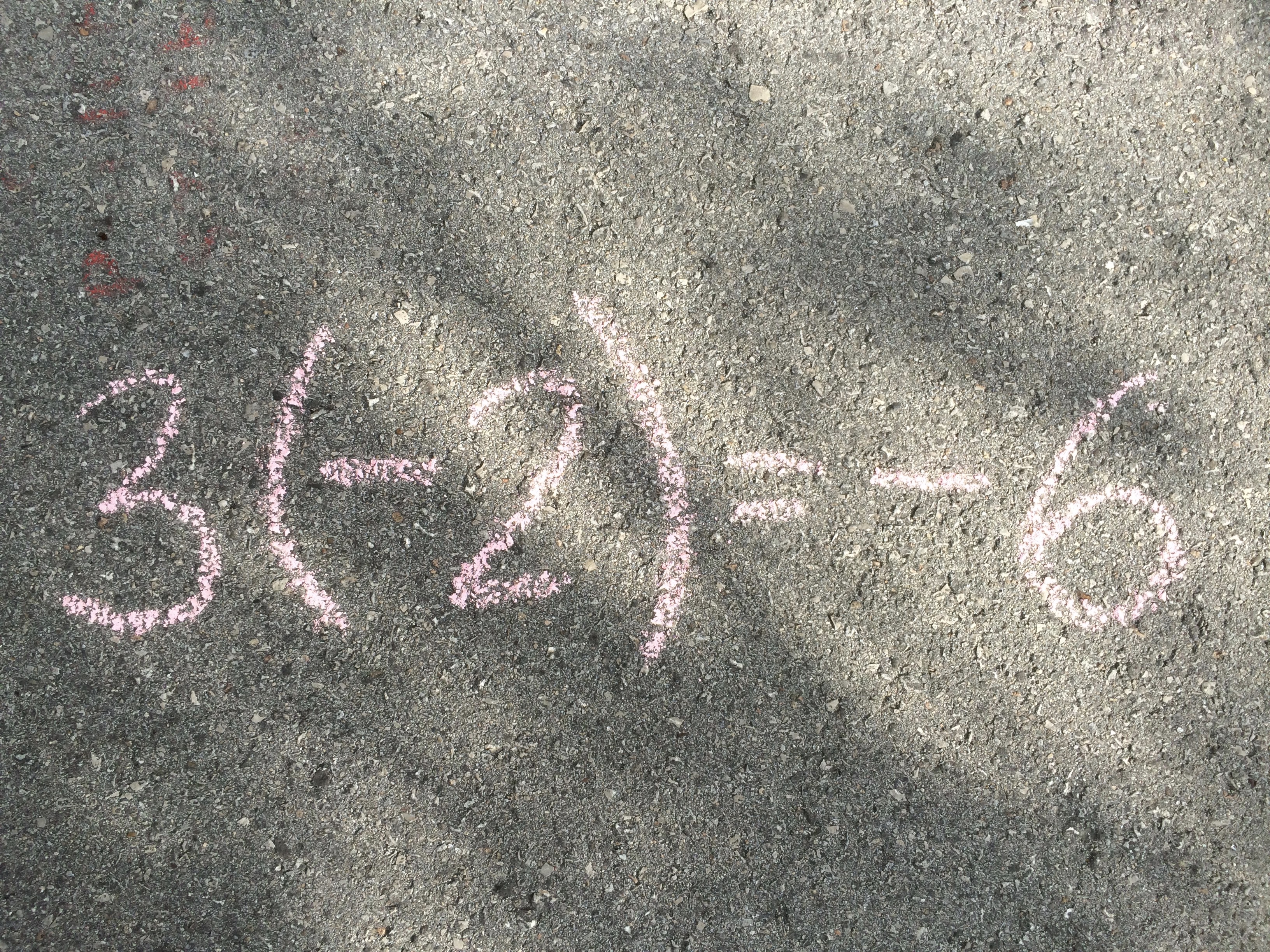 You spent two dollars three times. A negative result for you, positive for the folks who were on the receiving end of the transaction.
What does –2(3) mean? How do you have something –2 times? You don’t. You gave it away twice. Hence the negative. You spent 3 dollars on two occasions. Since multiplication commutes, 3(–2) = –2(3) and you are out 6 dollars either way.
Fine. (Said brusquely.) But, what does –3(–2) mean? It may seem like spending two dollars three times, but that was what happened when we calculated 3(–2). This is negative three times negative two. We are taught that the result is positive. But, why? Did we un-spend 2 dollars we didn’t have? Yes, if by “un-spend” you mean “giving a bill for.”
The product –3(–2) could be used to represent giving 3 bills for 2 dollars. You gave something, accounting for one negative. The thing you gave is a bill for $2 (versus a 2 dollar bill), another negative. The idea of giving someone a bill for goods or services may be beyond the experience of younger math students. But, then how to explain?
 Let’s change direction.
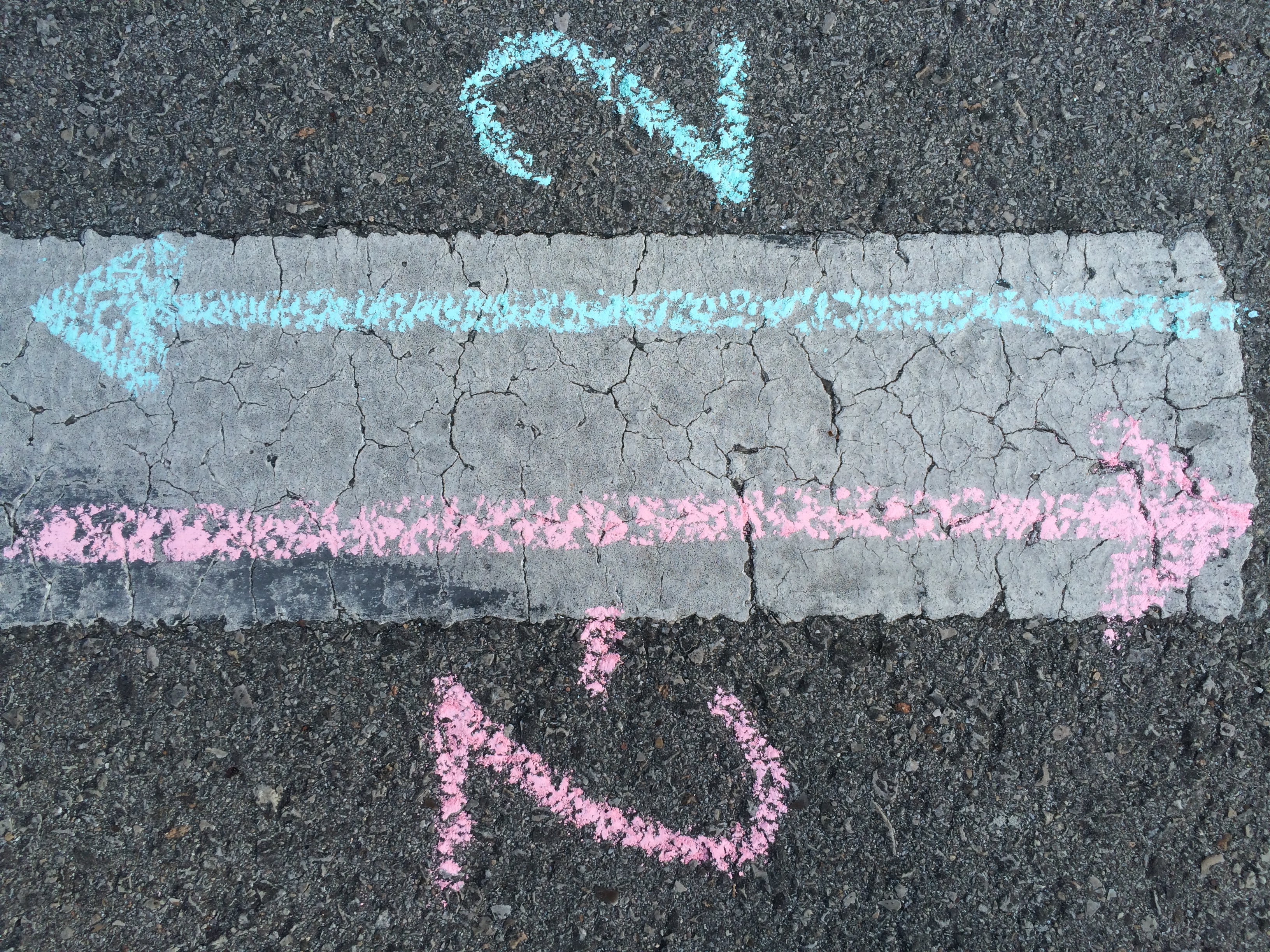
Instead of finances, let’s take negative to mean “go the other way.” If positive is forward, then 3(–2) means to go backward 2 units thrice. (Who says “thrice”? I did. It means “three times”, like twice but more.) You end up sitting 6 units behind where you started. In this context, –3(–2) means to go the other way from backward 2 units thrice. Now, I am no ship’s cap’n, but I reckon going the other way from backward is as good as going forward. Go forward 3 units twice, and you’ll be sitting 6 units ahead of where you started.
Adding negatives is about going backward a bit and going backward some more.

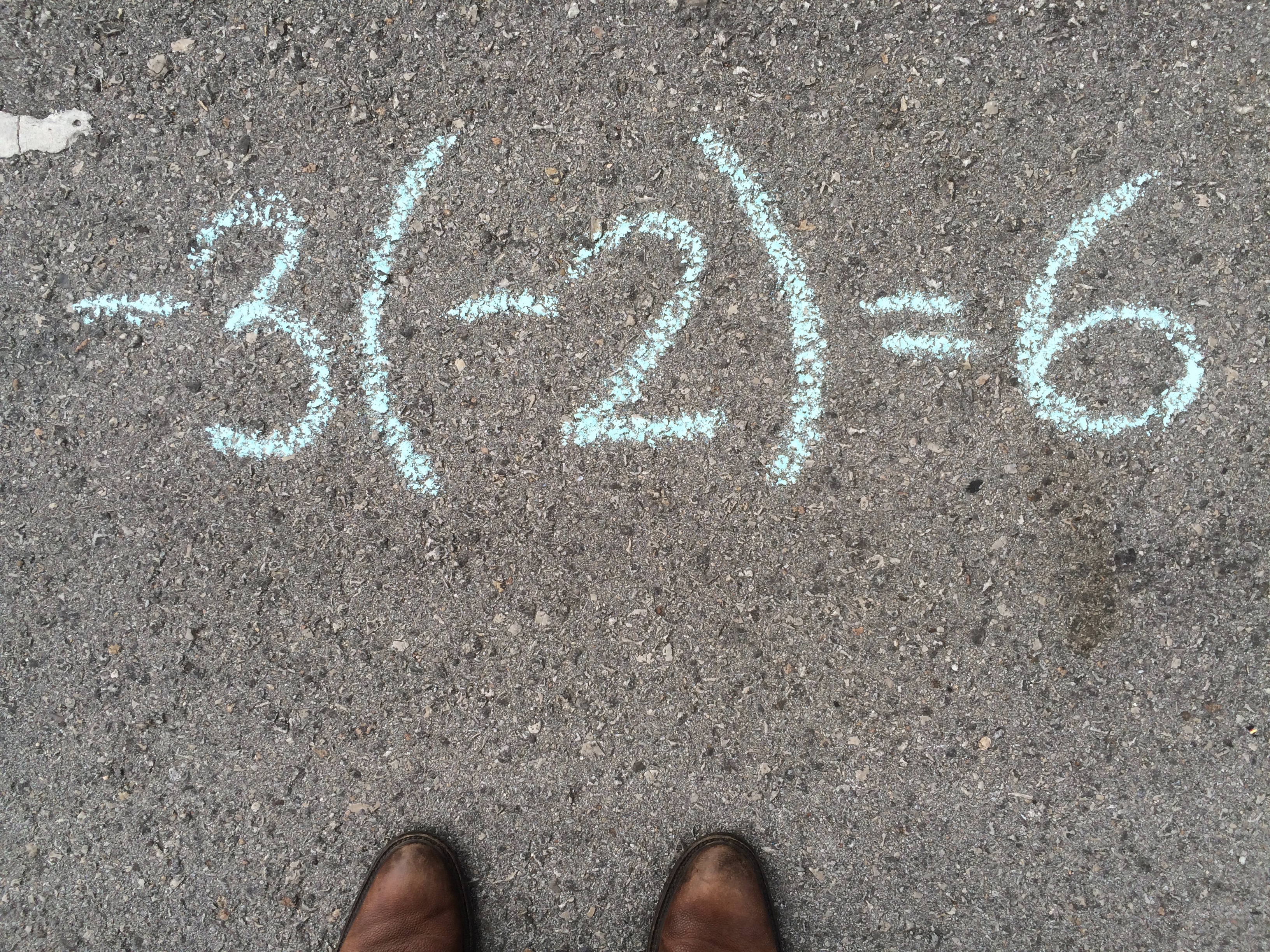 Multiplying negatives is about going backward from backward, which just means going forward.

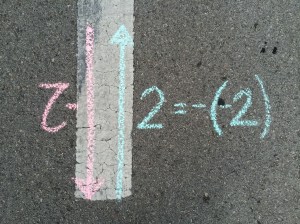 Before we go anywhere, what about pesky problems like –3 – (–2)? No sweat. That double negative is multiplication; – (–2) means “go the other way from backward” 2 units. In which case, –3 – (–2) means go backward three units and then go the other way from backward two units, i.e. –3 – (–2) = –3 + 2.
If you are wondering about negative exponents, good on you. But, I suggest we come back to 3–2 another day.


 Footpath Math: Chalk it up to a math geek
This was kind of helpful. Some videos in there I recorded. Some students had trouble making the connection to ‘the rules’ from this.
https://docs.google.com/presentation/d/1nKnTkgrOj4BTuVG__a3G9QAOyj5m_G6MtGy2nKIy-4g
By ‘this’ I mean my slideshow. Your blog was not just ‘kind of’ helpful 😀
I am looking forward to seeing what you have done with your students!